
NEWS
Google Play Uses Foldables to Police Large Screens
Google Play will freeze updates in April 2027 for apps that still letterbox on foldables, then push the same rule onto tablets and Googlebooks.

Google Play will freeze new apps and updates in April 2027 if they still letterbox on foldable phones.
Developers who miss the Tier 3 Adaptive ready bar will no longer be able to publish or update on Google Play, and may see weaker store visibility. Games get until August 2027 for the quality tests, though they still owe foldable screenshots in April. The same rulebook is built to travel to tablets, Googlebooks, and Android XR after that.
Play Will Block Updates That Still Letterbox
Mishaal Rahman, who handles community engagement for Android at Google, posted the dates on November 18, 2026. Apps must meet Adaptive ready and add foldable listing shots in April 2027. Games add those shots in April and face the quality bar in August.
📣 Heads up devs: Google Play is introducing new foldable quality requirements!
For apps, they'll need foldable screenshots & meet Tier 3 adaptive quality guidelines starting Apr 2027.
For games, foldable screenshots are required in Apr 2027 & Tier 3 quality in Aug 2027 🧵 pic.twitter.com/2obQ5KdOIe
— Mishaal Rahman (@MishaalRahman) November 18, 2026
The penalty is store access, not a warning badge. An app that still draws black bars, drops typed text when you unfold the phone, or dies in split-screen will not get a new release through Play. Older builds that never receive an update stay downloadable. They just freeze in place.
That split matters for small catalogs. A hobby project can sit on the store forever in its last good build. A live product that ships weekly cannot. The freeze lands on the teams that still change code.
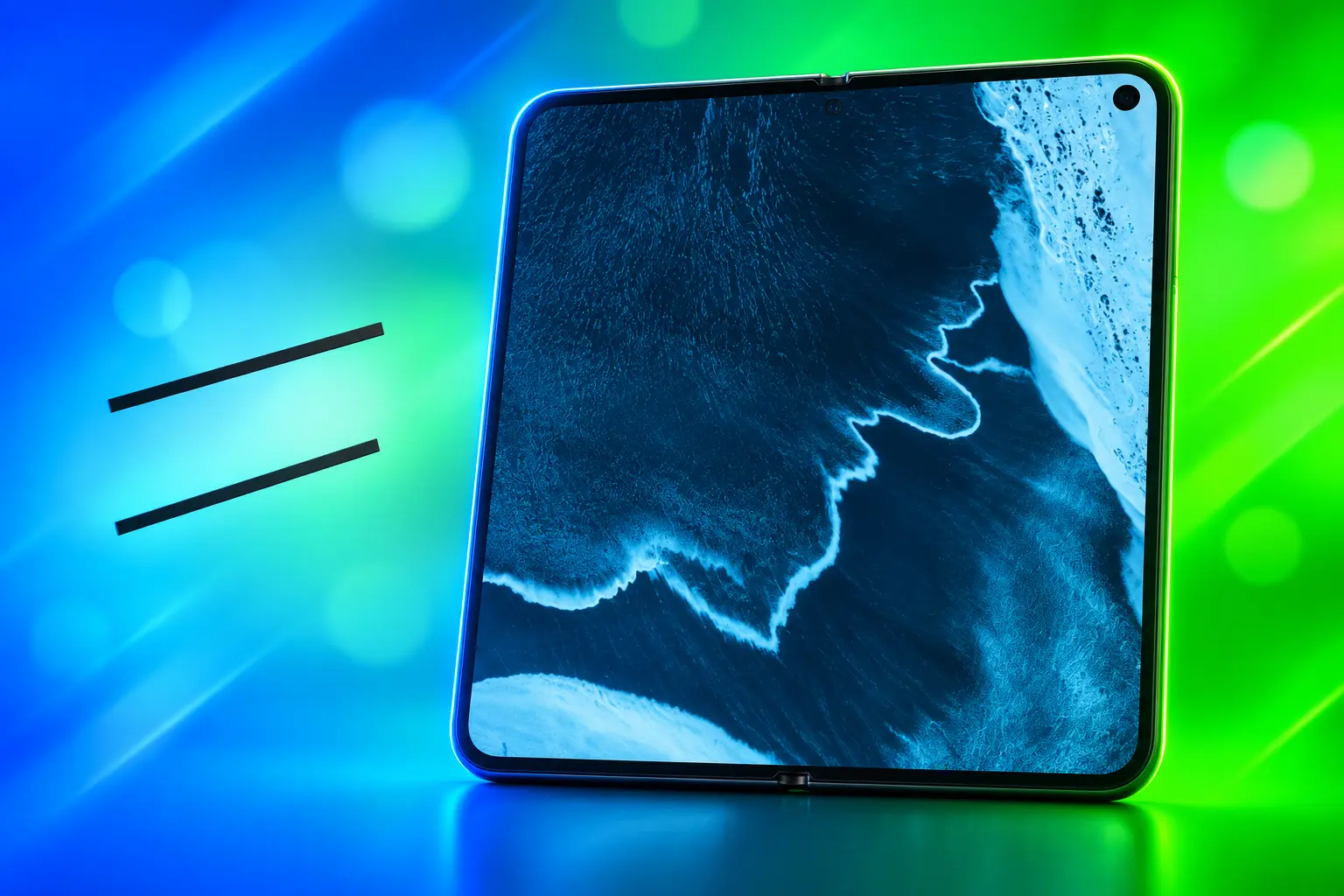
What Tier 3 Adaptive Ready Requires
Google’s own quality page says Adaptive ready apps run full screen on all form factors and give basic support for outside input, so a user can finish critical tasks on any device. Layout can still look like a stretched phone. The window cannot sit in a letterbox or in compatibility mode.
THE THREE ADAPTIVE TIERS
| Tier | Name | Play status | What it asks |
|---|---|---|---|
| Tier 3 | Adaptive ready | Required in April 2027 for apps | Fill the window, keep state, work in multi-window |
| Tier 2 | Adaptive optimized | Optional, badge | Multi-pane layouts plus keyboard, mouse, trackpad, and stylus |
| Tier 1 | Adaptive differentiated | Optional, badge | Tabletop and book postures, camera continuity, interactive picture-in-picture |
State is the part users notice. Scroll position has to survive rotation, folding, unfolding, and a resize in split-screen or desktop windowing. Typed text has to stay in the field, with the keyboard restored. Media has to resume where it left off. Google also tests stacked changes, such as a resize followed by a fold.
Camera apps get a concrete test. Preview has to stay in the right proportion in portrait and landscape, folded and unfolded, and in multi-window. A portrait-only viewfinder that stretches across a Pixel 11 Pro Fold inner display fails that test. Media projection has the same bar.
Basic mouse, trackpad, and keyboard support sits in Tier 3 too. Connecting a keyboard must not relaunch the app. A stylus on Android 14 and higher can write in text fields by default, including on Googlebook and ChromeOS M114 WebViews. Unity titles need Unity Long Term Support 2019 or later for the multi-window checks.
Games Get Until August and a Square Inner Screen
Games keep a longer runway because a HUD is not a list view. Rahman said foldable screenshots are still due in April 2027, with Tier 3 quality in August 2027. The extra months are for engines, not for listings.
GAME TIER 3 RULES
- Full-screen play: Titles render full screen in the orientations they support, with HUD safe areas left clear.
- Unsupported turns: When the player rotates into an orientation the game does not support, the engine letterboxes or pillarboxes cleanly instead of stretching the world.
- State and touch: Progress, camera, and touch alignment survive folding, unfolding, rotation, and a multi-window resize, without a mid-level restart.
The geometry fight is the square inner display. A landscape shooter can still draw bars when the phone is turned the “wrong” way. On a 1:1 inner panel the supported orientation still has to fill the square, which is a different problem from a 20:9 phone. That is the complaint coming from game shops that already letterbox on purpose.
Play’s game rules and Android 17’s platform rules also diverge. Titles flagged with the android:appCategory game value stay exempt from the OS ignoring portrait locks. They do not stay exempt from Play’s August quality bar. Engine work still has a store date.
Android 17 Already Ignores Portrait Locks
The Play freeze is the store half of a change the operating system already made. Android 16, in 2025, began ignoring fixed orientation and non-resizable windows on large screens and left a temporary opt-out. Android 17, API level 37, removes that opt-out for apps that target it.
Matthew McCullough, vice president of product management for Android developer, wrote in June 2026 that the system ignores legacy manifest flags and runtime calls, including screenOrientation, setRequestedOrientation(), resizeableActivity set to false, and min and max aspect ratio, on large screens. Google’s behavior page says those orientation and resizability restrictions no longer apply on displays whose smallest width is greater than 600dp. Apps fill the window. Pillarboxing is not used.
Phones below that width still honor a portrait lock. Users can also force an app back to its old behavior in the device aspect ratio settings. Everyone else on a tablet, an unfolded foldable, or a big connected display gets a window the app no longer gets to refuse.
THE ADAPTIVE CALENDAR
- 2025: Android 16 ignores orientation and resize locks on large screens and ships a temporary opt-out.
- June 16, 2026: Android 17 ships. The opt-out is gone for apps that target API 37.
- November 18, 2026: Google Play announces Adaptive ready rules and foldable listing shots.
- April 2027: Apps must meet Tier 3. Apps and games must include three foldable screenshots.
- August 2027: Games must meet Tier 3. New apps and updates must target API 37.
Rahman later told developers that forcing the store rule at 12L would have been too aggressive, because the OS and the tooling were not ready. He pointed at Jetpack Compose adaptive APIs, Android CLI screenshot tools, a Compose adaptive skill in Android Studio, and native resizing work with Unity and Unreal. The Play date is the moment those platform changes stop being optional.
August 2027 is also when Play requires new apps and updates to target API 37, which is how the opt-out removal becomes a distribution rule. That target date arrives while Android 17’s share of active devices is still early, so the squeeze hits shipping pipelines before it hits most handsets.
Tablets, Googlebooks, and Android XR Come Later
Foldables are the first surface Play will police. They are not the installed base Google is counting. Fahd Imtiaz, senior product manager for adaptive apps, wrote on May 19, 2026, that Android already reaches more than 580 million large screen devices. McCullough used the same figure in the Android 17 launch post, next to the forthcoming launch of Googlebooks built on the Android stack.
Google’s internal 2026 figures put money on those screens. Multi-device users spend 9 times more on average than phone-only users. On foldables the multiplier can reach 14 times. Users of tablets, foldables, and Chromebooks typically spend about 5 times more than phone-only users. Those are three different groups, not one stacked claim.
Rahman made the same pivot in his thread. Adaptive layouts, he said, pay off beyond foldables and lift quality across 580 million-plus large-screen devices, spanning tablets, Googlebooks, and Android XR. Google has said it plans to extend the Play quality rules to tablets, Googlebooks, and Android XR in later phases. The April foldable gate is the first lock on a door that is already framed for every window above 600dp.
Samsung DeX, desktop windowing, App Bubbles, and connected displays all sit on the same side of that line. A portrait-only activity that survived on a Galaxy Z Fold8 by hiding in compatibility mode will not survive a Googlebook window either. The hinge is the political excuse. The window size is the actual test.
Three Foldable Screenshots Join Every Listing
Play Console opened foldable screenshot uploads on November 18, 2026. Google said the images would start showing up on listings over the following weeks. From April 2027 they become a standard submission requirement for new apps and for listing updates, on top of the usual two phone shots. Games owe the foldable set in April even though their quality tests wait until August.
FOLDABLE LISTING SHOTS
- 1:1 inner: At least one unfolded inner screenshot at a square ratio, the shape Google cites for the Pixel 11 Pro Fold and the Galaxy Z Fold8 Ultra.
- 4:3 inner: At least one unfolded inner screenshot at 4:3, the shape Google cites for the Galaxy Z Fold8.
- Outer cover: At least one portrait shot of the folded outer display at 10:16, with a 16:10 landscape outer shot optional.
Shots can come from a physical device or the Android Emulator. Supplying pictures does not replace the quality tests. A listing can show a full inner display while the binary still letterboxes, and Play can still refuse the next update in April.
Apple put the iPhone Duo on sale on October 23, 2026, at $1,999, with a 7.6-inch inner display and a 5.4-inch cover. Susan Prescott, vice president of Worldwide Developer Relations at Apple, said on November 6 that well over 100,000 apps built for the Duo were already live. Greg Joswiak, Apple’s senior vice president of Worldwide Marketing, said on November 16 that more than 200,000 apps were optimized, a doubling in 10 days. Google’s Play post landed two days later. The OS work started a year earlier. The calendar still reads as a response.
Tier 2 and Tier 1 Earn Play Badges
The mandatory bar is the boring one. Multi-pane layouts, tabletop posture, book posture, and extra input polish stay in the optional tiers. Apps that reach Tier 2 or Tier 1 can apply now for badging and extra merchandising on Play. Rahman said those higher tiers also set games up for Google Play Games Level Up.
I want foldable users to have an app experience free from black bars, stretched UIs, or games restarting mid-level!
Mishaal Rahman, community engagement for Android at Google, on X
That is the user-facing pitch, and it is overdue on hardware that has been folding since Samsung’s first Fold. Play treated large-screen quality as a notice on a listing and a badge for teams that opted in. From April 2027 the notice becomes a lock on the next upload. The hinge is how Google is selling it. The window above 600dp is what the lock actually guards.

The Strip Bojangles That Charged $100 for 10 Minutes

The Security Fixes Took Microsoft and the NSA Offline

iOS 27 Finally Shrinks the Giant iPhone Lock Screen Clock

AirPods Pro 3 Are $179 Again, Below Last Year’s Cut

Dragon Returns ISS Samples Only It Can Bring Home

Microsoft 365 Auth Fault Took Down Exchange and Teams

OpenClaw 2.0 Ships a Team Workplace With Host-Trust Defaults

Xbox Caps Game Pass Cloud Gaming at 15 Hours

OpenAI Unveils GPT-6 Astra With a Critical Cyber Label

Squishy Dumpling Toys Recalled After Hiding Illegal Water Beads
-
 NEWS3 months ago
Microsoft 365 Auth Fault Took Down Exchange and Teams
-
 NEWS3 months ago
OpenClaw 2.0 Ships a Team Workplace With Host-Trust Defaults
-
 GAMING3 months ago
Xbox Caps Game Pass Cloud Gaming at 15 Hours
-
 NEWS3 months ago
OpenAI Unveils GPT-6 Astra With a Critical Cyber Label
-
 LIFESTYLE3 months ago
Squishy Dumpling Toys Recalled After Hiding Illegal Water Beads
-

 BUSINESS3 months ago
Diesel Breaks Its Record as the White House Claims Credit
-

 NEWS3 months ago
IFA 2026’s Weird Gadgets Are Building a Sensor Home
-

 BUSINESS3 months ago
ChargePoint Stock Rally Prices Wilmer’s Three-Year Cash Plan