
NEWS
Hyperscale Data Centers Hit State-Scale Power as Firms Skip Antalya
A Harvard study found 403 hyperscale data centers used 82 TWh, as US tech firms skipped a UN pledge to clean up AI power.

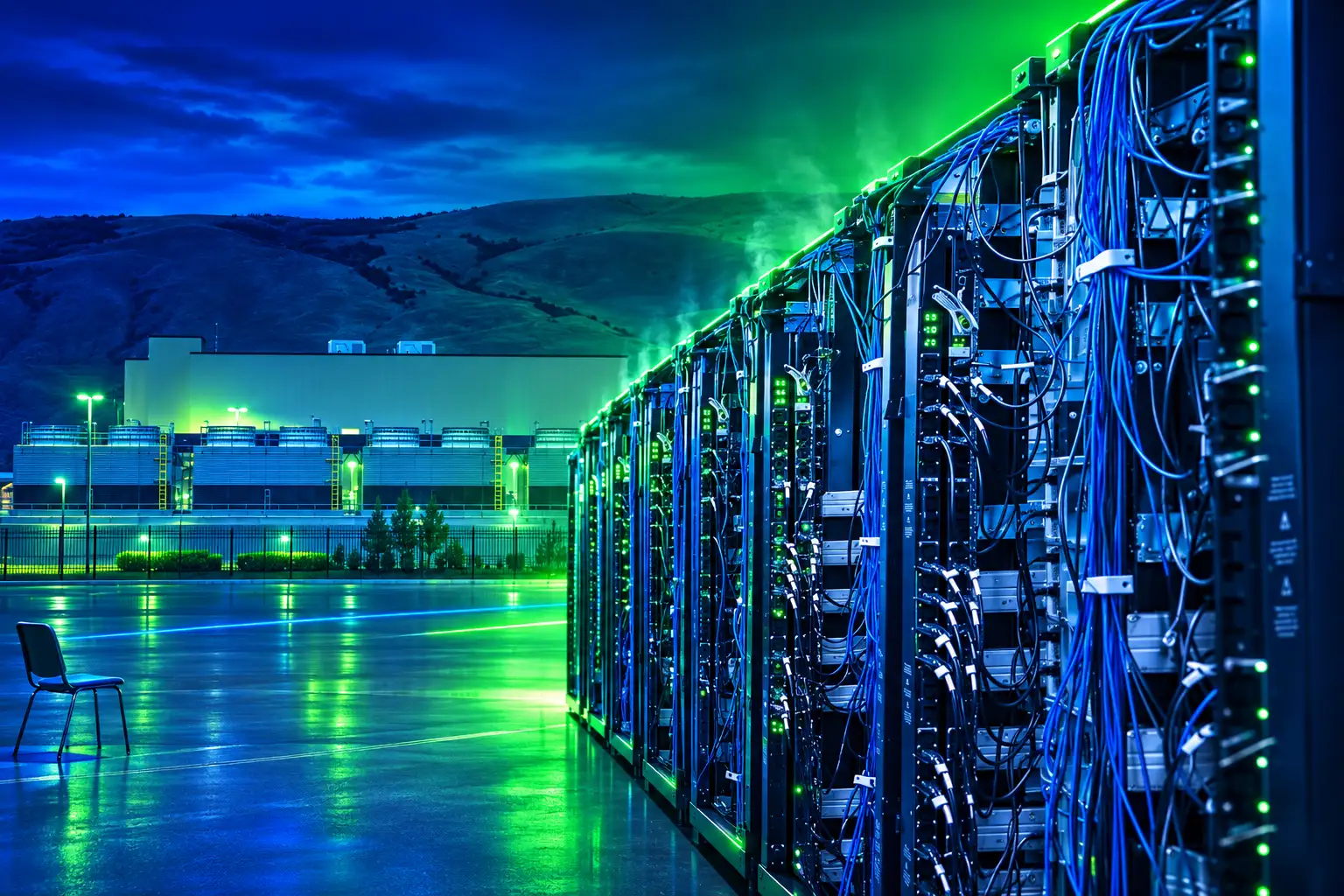
Harvard researchers found 403 US hyperscale data centers used about 82 terawatt-hours of electricity in a year, about 1.8% of US demand. That load, measured from May 2024 to April 2025, sits in the range of what Indiana, Michigan or Tennessee uses.
The paper came out on November 16, 2026, the same day COP31 in Antalya launched a voluntary pledge to put cleaner power under AI. Amazon, Meta and Microsoft were not among the signatories.
Harvard’s Count Starts at 82 Terawatt-Hours
Gianluca Guidi, a postdoctoral fellow in biostatistics at the Harvard T.H. Chan School of Public Health, led the team with Francesca Dominici, director of the Harvard Data Science Initiative. They spent two years building facility-level estimates of electricity use and carbon dioxide from satellite images, industry records and Environmental Protection Agency grid data, then published the results in Nature Sustainability.
Across operating scenarios, the 403 sites used 68 to 99 terawatt-hours of electricity. The central case is about 82 terawatt-hours. Attributable carbon dioxide ran from 21 to 31 million metric tons, with a central figure of 25.7 million metric tons, two to three times an earlier 2018 estimate. Roughly 54% of the attributed power came from fossil fuels, mainly natural gas at 38% and coal at 15%.
THE 403-SITE YEAR
| Measure | Central case | What else the paper reports |
|---|---|---|
| Electricity use | about 82 TWh | 68 to 99 TWh across load scenarios |
| Share of US electricity | 1.8% | Upper bound near Indiana, Michigan or Tennessee |
| Carbon dioxide | 25.7 million metric tons | 21 to 31 million metric tons |
| Fossil share of power | 54% | Natural gas 38%, coal 15% |
| Typical site capacity | about 40 megawatts | Windowless halls running around the clock |
Guidi has described the buildings as factories that never sleep. Every email, photo, stream and chatbot query, he said, passes through halls packed with machines that throw off heat and need constant cooling. The study could not split AI jobs from other cloud work, and it did not cover every large US site, so the authors treat the totals as a floor.
Four States Already Carry More Than Half
The load is not spread across the map. Virginia, Oregon, Ohio and Iowa accounted for more than half of the electricity in the sample. Virginia alone held 142 of the 403 sites, more than a quarter of the set, and used 21.40 terawatt-hours. Oregon ranked second on power, not because it had the dirtiest grid, but because it packed 56 large halls onto cheap Columbia River electricity.
WHERE THE SAMPLE’S POWER SAT
| State | Sites in the study | Electricity (TWh) | CO2 (million metric tons) |
|---|---|---|---|
| Virginia | 142 | 21.40 | about 7.0 |
| Oregon | 56 | 11.13 | about 1.3 |
| Ohio | 38 | 8.84 | about 2.9 |
| Iowa | not separately counted here | 7.17 | about 3.2 |
Virginia’s halls were tied to about 7.0 million metric tons of carbon dioxide, the most of any state. Iowa’s smaller draw still produced about 3.2 million metric tons. The geography is the carbon story as much as the megawatts are, because a hall only emits what the plants on its regional grid emit.
Why Oregon’s Megawatts Emit Less Than Ohio’s
Oregon’s 11.13 terawatt-hours produced about 1.3 million metric tons of carbon dioxide. Ohio used 8.84 terawatt-hours and produced about 2.9 million. Same class of building, different fuel mix behind the meter. Guidi has put it simply: two data centers on the same electrical diet can leave very different carbon footprints because of where they sit.
The published paper’s national weighted intensity is about 314 grams of CO2 per kilowatt-hour, a bit below the US total-output average of about 348 grams. Hydro-heavy sites pull that average down. About a quarter of the sample’s electricity still sat on grids dirtier than the national mean, and many halls cluster where coal plants remain a large part of the mix. The 54% fossil share and the slightly cleaner weighted intensity are not a contradiction. They describe different slices of the same year.
Dominici said decisions about where the buildings go, and what powers them, are environmental and public health decisions that should be made with good data. The industry has not published a public, facility-level inventory that would let a county board see that picture without a research team and a satellite pass.
The Snapshot Ended in April 2025
Guidi told interviewers that the data stop in April 2025, which in AI time is ancient history. He said large-scale sites in operation have already more than doubled since the sample, with about 2,000 more planned or under development. “The industry is growing faster than anyone can track it,” he said. In the Harvard release he warned that electricity use and the carbon footprint in the paper could already be substantially larger in 2026.
FROM THE STUDY WINDOW TO ANTALYA
- May 2024: The Harvard count of operating hyperscale sites begins.
- April 2025: The study window closes on 403 verified halls.
- November 16, 2026: Nature Sustainability publishes the paper, and Türkiye and the ITU launch the Antalya AI Pledge at COP31.
- November 17, 2026: Amazon posts a separate 2030 target to cut electricity carbon intensity 65% from 2019.
Lawrence Berkeley National Laboratory’s 2025 update, which covers all US data centers rather than this hyperscale slice, puts a 2030 reference case at 649 terawatt-hours, or 11.8% of US electricity, inside a band of 9.5% to 15.3% and 521 to 843 terawatt-hours. Guidi’s 82 terawatt-hours is a rear-view reading of the largest class of halls. The lab’s 2030 case is the road those halls are on.
Antalya’s Pledge Drew Nine Countries and Alibaba
Türkiye’s COP31 presidency and the International Telecommunication Union opened the Antalya Artificial Intelligence Pledge on November 16. Signatories are asked to work on transparency, efficient infrastructure, sustainable design and circularity, and climate action, including low- and zero-emission power for AI halls. Tomas Lamanauskas, ITU deputy secretary-general, wrote that data centres powering AI growth could use nearly 945 terawatt-hours a year by 2030, with cooling water on the scale of domestic needs for 1.3 billion people, and that AI, if used well, could cut 3.2 billion tonnes of carbon-dioxide equivalent a year by 2035.
Early government signatories were small and scattered. Alibaba was the only major technology company named among them. The United States, China and the European Union did not endorse the text as blocs. The ITU said it would keep the pledge open until COP32 and keep talking to large firms.
COUNTRIES NAMED AS EARLY SIGNATORIES
- South Korea: The main government signer among large AI users.
- Brazil and Colombia: The South American names on the opening list.
- Turkey: Host and co-author of the pledge text.
- Andorra, Luxembourg, Sierra Leone, Somalia and Uganda: The remaining five of the nine.
Evan Tachovsky, chief data and AI officer at the World Resources Institute, said the pledge sets a direction of travel but lacks the accountability mechanisms to steer countries and tech companies. He noted it leaves out community voice in siting and safeguards on water and air, and he called for firms to pay for their own grid upgrades. Julie Cerqueira, chief program officer at the Natural Resources Defense Council, said voluntary standards alone are not enough.
We cannot ask people to accept higher bills, more planet-heating pollution and deeper inequality today in exchange for promises of a better tomorrow.
Simon Stiell, Executive Secretary, UN Climate Change, COP31 Antalya
Stiell also said AI leaders are on thin ice on their license to operate, and that claims about future emissions savings cannot excuse rising pollution now. The pledge he was blessing does not bind Amazon, Meta, Microsoft, Google or Nvidia to a kilowatt-hour of new clean supply. That is the collision the Monday of November 16 actually produced: a map of 403 halls, and a sign-up sheet the owners of those halls did not join.
Amazon Set a 65% Intensity Goal the Next Day
On November 17, Kara Hurst, Amazon’s chief sustainability officer, wrote that the company aims to cut the carbon intensity of electricity its global operations use by 65% by 2030, compared with 2019, on the way to a 2040 net-zero target. Intensity is carbon per unit of power, not the total tonnes a growing fleet emits. A company can hit an intensity goal while absolute power, and location-based grid emissions, still rise.
Harvard counted the plants on the local grid. Corporate intensity targets often count market instruments, power purchase deals and certificates. Guidi has urged readers to separate what companies commit to on paper from the physical emissions of the infrastructure. The Antalya text asked for cleaner electrons at the halls. Amazon answered with a company-wide intensity path. Those are not the same ledger.
Clean-cloud marketing still runs ahead of the fuel mix in the sample. More than half the attributed power in Guidi’s year came from gas and coal. A voluntary pledge with nine country names cannot reroute that mix, and a 65% intensity goal does not by itself move a Virginia coal-and-gas stack. Siting and interconnection will decide the next tonne, because the next campuses are already larger than the typical 40-megawatt hall in the dataset.
The Health Bill Lands Downwind of the Plants
Dominici said the team did not measure health effects, and that this is the next step. Carbon dioxide drives heat, smoke and floods. The fossil plants that follow the load also release fine particles, nitrogen oxides and sulfur dioxide tied to heart and lung disease and early death. People living near those plants, she said, may bear costs even if they live far from the data hall.
Quantifying health impacts is an important next step. First, carbon dioxide drives climate change, which affects health through heat waves, wildfire smoke, flooding, and other pathways. Second, the fossil fuel power plants in the regional electricity systems associated with this demand also release other pollutants, such as fine particulate matter, nitrogen oxides, and sulfur dioxide, that are directly linked to heart and lung disease and premature death.
Francesca Dominici, Clarence James Gamble Professor of Biostatistics, Harvard T.H. Chan School of Public Health
Guidi argued that evidence should not show up after the buildings do, and that the public’s voice should not either. He said communities should not need a Harvard team studying satellite images to learn the local impact. Michael Thomas, who runs the tracker Cleanview and was not part of the study, has said US senators have asked him how many data centers exist because they are trying to write a bill, a job that would normally sit with federal energy agencies if a public inventory existed.
The paper is already late on its own terms. Guidi has asked hyperscalers to prove they can build the next round right, after proving they can build it fast. About 2,000 large facilities are planned or under development, he said. The Antalya pledge stays open until COP32. The halls in the queue will draw power long before that stocktake.
We’ve proven we can build AI really fast. Now, let’s prove that we can build it right.
Gianluca Guidi, Postdoctoral Fellow in Biostatistics, Harvard T.H. Chan School of Public Health
The 403-site year is in the record. The signatures that would have tied those sites to cleaner power are not.

The Strip Bojangles That Charged $100 for 10 Minutes

The Security Fixes Took Microsoft and the NSA Offline

iOS 27 Finally Shrinks the Giant iPhone Lock Screen Clock

AirPods Pro 3 Are $179 Again, Below Last Year’s Cut

Dragon Returns ISS Samples Only It Can Bring Home

Microsoft 365 Auth Fault Took Down Exchange and Teams

OpenClaw 2.0 Ships a Team Workplace With Host-Trust Defaults

Xbox Caps Game Pass Cloud Gaming at 15 Hours

OpenAI Unveils GPT-6 Astra With a Critical Cyber Label

Squishy Dumpling Toys Recalled After Hiding Illegal Water Beads
-
 NEWS3 months ago
Microsoft 365 Auth Fault Took Down Exchange and Teams
-
 NEWS3 months ago
OpenClaw 2.0 Ships a Team Workplace With Host-Trust Defaults
-
 GAMING3 months ago
Xbox Caps Game Pass Cloud Gaming at 15 Hours
-
 NEWS3 months ago
OpenAI Unveils GPT-6 Astra With a Critical Cyber Label
-
 LIFESTYLE3 months ago
Squishy Dumpling Toys Recalled After Hiding Illegal Water Beads
-

 BUSINESS3 months ago
Diesel Breaks Its Record as the White House Claims Credit
-

 NEWS3 months ago
IFA 2026’s Weird Gadgets Are Building a Sensor Home
-
 BUSINESS3 months ago
ChargePoint Stock Rally Prices Wilmer’s Three-Year Cash Plan