
NEWS
Apple’s iMessage Group Patch Leaves Other Members Guessing
Apple patched iMessage group join and history bugs on November 9, 2026, yet other members still cannot tell who is in the thread or whether iOS 18 got the fix.

Apple on November 9, 2026 closed two iMessage group bugs, including one that let a remote attacker join a chat and receive its messages. A second bug let a newly added member read messages sent before they joined. The people who feel that first are everyone else in the thread, and Apple’s notes still will not tell them whether a silent joiner would even appear.
The company shipped nine operating-system updates the same day. Only some of those files list the chat fixes, and none of them says whether every participant has to install the patch for the group to be closed.
Two iMessage Group Bugs, Credited to an Anonymous Researcher
The join hole is CVE-2026-113961. Apple calls it an authorization issue and says it was fixed with improved validation. The history hole is CVE-2026-113960. Apple says it was fixed by removing the vulnerable code. Both credits go to an anonymous researcher.
A remote attacker may be able to join an iMessage group chat and receive its messages
Apple, iOS 27.2.1 security notes
That line sits in the nine security entries for iOS 27.2.1, which cover Messages, Bluetooth, AirPlay, App Intents and the Brotli decoder. The page names iPhone 11 and later, plus a list of supported iPads, as the devices that get this build. It does not say what an attacker would need beyond the network path, and it does not say the bugs were used in attacks.
The second Messages line is quieter and, for people who already sent traffic into a group, harsher. Apple’s impact sentence is that a user added to an iMessage group may be able to access messages sent before they joined. The repair is not a tighter check. The vulnerable code was taken out.
THE TWO MESSAGES HOLES
| CVE | What Apple says could happen | How it was fixed | Credit |
|---|---|---|---|
| CVE-2026-113961 | A remote attacker may join an iMessage group chat and receive its messages | Improved validation | Anonymous researcher |
| CVE-2026-113960 | A user added to a group may access messages sent before they joined | Vulnerable code removed | Anonymous researcher |
Membership bugs of this kind do not need a crash. They fail the guest list. A stranger who can sit on the thread, or a late add who can scroll backward, reads other people’s mail without touching the lock screen.
Apple Will Not Say If the Silent Joiner Shows Up
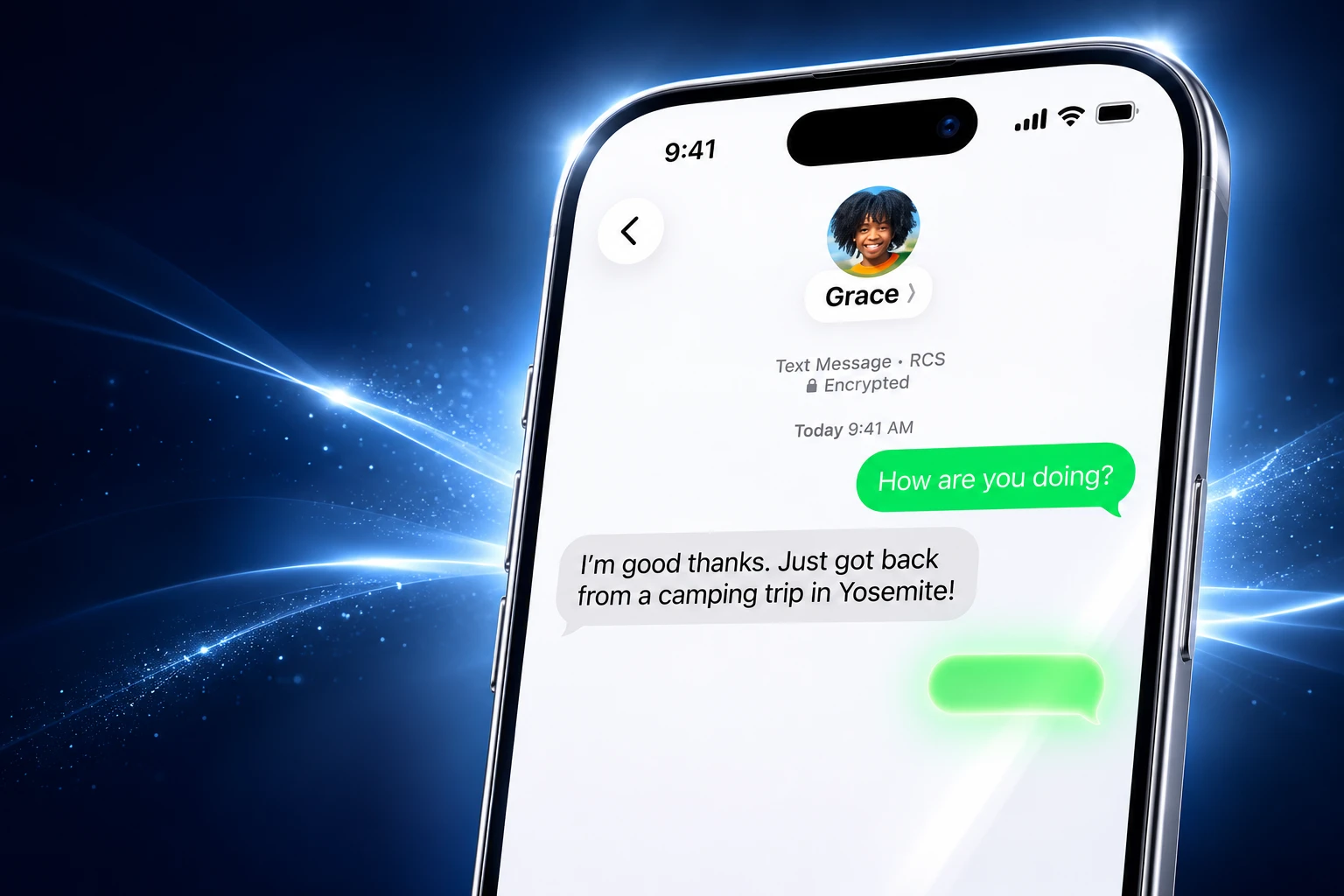
Group chats are a shared lock. One phone that still accepts a forged join, or still hands a new member the old scrollback, spends privacy that belongs to everyone else. Apple’s notes never say whether the other names in the thread would see a new participant if someone used CVE-2026-113961, and they never say whether every member must be on a patched build before the hole is closed.
They also offer no workaround for a device that cannot take the update. Two weeks after iOS 27.2, which carried more than 150 security entries on October 26, 2026, this follow-up is a short file with no user-facing switch to flip.
WHAT WE KNOW
- The join bug: Apple describes CVE-2026-113961 as an authorization issue that a remote attacker could use to join a group and receive its messages.
- The history bug: Apple describes CVE-2026-113960 as a path that let a newly added member reach messages sent before they joined.
- The notes that list them: iOS 27.2.1 and iOS 26.7.3, with matching iPadOS files, both publish the two Messages entries.
- The credit line: Both Messages bugs, and the CoreUtils pairing bug CVE-2026-113964, are credited to an anonymous researcher.
WHAT IS UNCONFIRMED
- Attacks on the chat bugs: Apple’s notes do not say CVE-2026-113961 or CVE-2026-113960 were used in the wild.
- A visible joiner: The company does not say whether group members would see a name appear if someone joined through the hole.
- A whole-group update: The notes do not say whether every participant must patch before the thread is protected.
- Older still-supported phones: Apple does not say whether iOS 18.7.12 or watchOS 26.6.1 devices were affected by the two chat bugs.
That last silence is the part other members cannot fix from their own Settings app. You can update your iPhone. You cannot inspect someone else’s build, and you cannot ask Messages whether the person who just went quiet in the thread was ever on the invite list.
Which Updates List the iMessage Fixes?
Apple’s security-releases list for November 9, 2026 names nine system updates. The Messages CVEs appear on the current iOS 27 line, on the iOS 26 line that iPhone 11-class hardware can still run, and on the matching Mac, Watch and Vision builds in the CVE’s own “fixed in” list. They do not appear in the iOS 18 file.
WHERE THE CHAT FIXES SHOW UP
| Update | Who it is for | iMessage 113961 and 113960 | Brotli 111497 | Shared pairing set |
|---|---|---|---|---|
| iOS 27.2.1 and iPadOS 27.2.1 | iPhone 11 and later, listed iPads | Listed | Listed | Listed |
| iOS 26.7.3 and iPadOS 26.7.3 | iPhone 11 and later, older listed iPads | Listed | Listed | Listed |
| iOS 18.7.12 and iPadOS 18.7.12 | iPhone XS, XS Max, XR, iPad (7th generation) | Not listed | Not listed | Listed |
| macOS Golden Gate 27.2.1, Tahoe 26.7.3, Sequoia 15.8.3 | Those three Mac lines | On the CVE fix list | On the 27 and 26 iOS pattern; Sequoia lists Messages | Listed |
| watchOS 27.2.1 | Apple Watch Series 9 and later | On the CVE fix list | On the CVE pattern with 27.2.1 | Listed |
| watchOS 26.6.1 | Series 6, 7, 8, SE (2nd generation), Ultra | Not listed | Not listed | Listed |
| visionOS 27.2.1 | Apple Vision Pro (all models) | On the CVE fix list | On the CVE pattern with 27.2.1 | Listed |
The “fixed in” line for CVE-2026-113961 names iOS 26.7.3, iOS 27.2.1, macOS Golden Gate 27.2.1, macOS Sequoia 15.8.3, macOS Tahoe 26.7.3, visionOS 27.2.1 and watchOS 27.2.1. It does not name iOS 18.7.12 or watchOS 26.6.1. That is the pattern Apple uses when a branch did not receive a given change, and it is not the same thing as a sentence that says those devices were never exposed. The notes still do not write that sentence.
So a family thread that mixes an iPhone 16 on 27.2.1, an iPhone 11 that stayed on 26.7.3, and an iPhone XR on 18.7.12 has two phones whose advisories list the chat bugs and one whose advisory does not. The XR still got the pairing fixes. The other names in the thread have no Apple line that tells them what that mix means.
iOS 18.7.12 Covers Pairing, Not the Chat
The file for iPhone XS, XS Max, XR and the 7th-generation iPad is iOS 18.7.12. It lists six bugs, all in AirPlay, Bluetooth, CoreUtils, MediaRemote or rapportd. It does not list CVE-2026-113961, CVE-2026-113960 or CVE-2026-111497.
It does list one pairing bug the iOS 27.2.1 file does not. CVE-2026-113971, in MediaRemote, is described as a path that could let an attacker with physical access pair a device with an AirPlay receiver from the lock screen. Apple says it restricted the options offered on a locked device. That is a nearby, hands-on problem, not a group-chat problem, and it is the extra item that brings the iOS 18 count to six.
watchOS 26.6.1, for Series 6, Series 7, Series 8, SE (2nd generation) and Ultra, follows the same chat silence. The Watch still gets the shared pairing set. It does not get a Messages entry. Series 9 and later, on watchOS 27.2.1, sit on the CVE fix list for the join bug.
iOS 27.2.1 also carries a ninth item the older phone file lacks: CVE-2026-113963 in App Intents, credited to László Várady, which Apple says could let an app access sensitive user data. That one is a local app problem. It is not why other people in your group are waiting on a build they cannot see.
Messages From Outside the Participant List Now Drop
The patched iMessage service in iOS 27.2.1 adds a hard stop that the prior 27.2 build did not show in the same place. A group message is now dropped when its sender is not in the participant list, and the service records that the sender failed that check.
That is the validation Apple’s CVE-2026-113961 note describes in one line. If a remote party could sit on a group without being in the list, the obvious repair is to refuse the payload. The fact that the drop path is new in 27.2.1 is the uncomfortable part. A guest-list check this basic was not the behavior the previous build advertised in that code.
CVE-2026-113960 is a different failure. Removing the vulnerable code means a newly added member should no longer be handed the backlog. It does not rewind what a late add may already have seen on an unpatched phone, and it does not tell the people who wrote those earlier messages that the scrollback had been too wide.
A Malicious Bluetooth Device Could Pair With No Tap
All nine November 9 updates share five nearby-device bugs. Two of them let pairing happen without the owner doing anything. Apple does not say what a paired device could then reach.
THE FIVE PAIRING BUGS IN EVERY FILE
- CoreUtils, CVE-2026-113965: A malicious Bluetooth device may be able to establish a pairing without user interaction, fixed with improved checks, credited to Apple.
- CoreUtils, CVE-2026-113964: An attacker in Bluetooth range may bypass the rate limit on pairing code attempts and pair without user interaction, a logic issue credited to an anonymous researcher.
- AirPlay, CVE-2026-113968: An attacker in Bluetooth range may bypass the rate limit on pairing code attempts, credited to Apple.
- rapportd, CVE-2026-113969: An attacker on the same network may bypass the rate limit on AirPlay pairing code attempts, credited to Apple.
- Bluetooth, CVE-2026-113970: An attacker in Bluetooth range may corrupt process memory through a use-after-free, credited to Apple.
These are café-table bugs, not internet bugs. They need someone in Bluetooth range or on the same network, which is a different stakeholder than the aunt in the family iMessage group. The pairing-code rate limit is supposed to stop guessing. Two of the fixes say that limit could be bypassed, and two say pairing could complete with no tap at all.
Apple found four of those five internally. The anonymous researcher who reported the Messages bugs also reported CVE-2026-113964, the one that combines a rate-limit bypass with pairing and no interaction. The notes still stop at pairing. They do not describe photos, files or sessions a silently paired gadget could pull.
CISA Already Flagged the Brotli Decoder as Exploited
The same iOS 27.2.1 and iOS 26.7.3 files that list the chat bugs also list CVE-2026-111497 in brotli. Apple’s impact line is that processing maliciously crafted input may lead to memory corruption, an out-of-bounds write fixed with improved input validation. The iOS 18.7.12 file does not list it.
The U.S. Cybersecurity and Infrastructure Security Agency (CISA) had already put that decoder bug in its Known Exploited Vulnerabilities catalog on October 27, 2026. The catalog names Google Brotli, describes an unchecked return value that lets a remote attacker with no login corrupt decoder memory, leak memory, crash a service or possibly run code, and tells federal civilian agencies to follow vendor guidance by November 10, 2026. It also says the flaw sits in an open-source component different products could use, and it lists ransomware use as unknown.
THE BROTLI DECODER’S OCTOBER CLOCK
- October 21, 2026: Google publishes Google’s Brotli 1.2.1 decoder fix.
- October 27, 2026: CISA adds CVE-2026-111497 to the exploited-vulnerabilities catalog, with a November 10 deadline for federal civilian agencies.
- November 9, 2026: Apple lists the decoder bug in iOS 27.2.1 and iOS 26.7.3, and omits it from iOS 18.7.12.
- November 10, 2026: The federal due date on the catalog entry lands.
Apple’s notes do not mention any attacks that used the decoder bug against Apple products. CISA’s listing is about the library, not about iMessage. The two facts sit next to each other in the same iPhone update and are not the same claim.
Frequently Asked Questions
Which Apple Updates Fix the iMessage Group Chat Flaws?
The published fix list for CVE-2026-113961 is iOS 26.7.3, iOS 27.2.1, iPadOS on those same numbers, macOS Golden Gate 27.2.1, macOS Tahoe 26.7.3, macOS Sequoia 15.8.3, visionOS 27.2.1 and watchOS 27.2.1. Sequoia is two Mac generations behind Golden Gate and still received both Messages entries. iOS 18.7.12 and watchOS 26.6.1 are not on that list.
What Did Apple Change for CVE-2026-113961 and CVE-2026-113960?
CVE-2026-113961 was an authorization issue repaired with improved validation, which is the join bug. CVE-2026-113960 was repaired by removing the vulnerable code, which is the history bug. Apple published no setting, filter or extra confirmation step a user can turn on instead of installing the update, and it gave both bugs to the same anonymous researcher.
Does iOS 18.7.12 Include the iMessage Privacy Fixes?
No. iOS 18.7.12 lists six Bluetooth and AirPlay pairing bugs, including CVE-2026-113971, a lock-screen AirPlay pairing issue that the iOS 27.2.1 file does not list, and it lists neither Messages CVE and no Brotli entry. Apple did not publish a workaround for anyone who remains on that branch.
Why Is the Brotli Bug in Apple’s Update Also on CISA’s List?
CISA added CVE-2026-111497 on October 27 because it has evidence the Brotli decoder bug is being used in attacks, and it set November 10 as the due date for federal civilian agencies. The catalog flags ransomware use as unknown and notes that an open-source component can show up in many products. Apple’s iOS 27.2.1 notes still do not say the decoder bug was used against Apple devices.
Apple still has not said whether group members would see a name appear if someone used the join bug. It still lists no workaround for a phone that cannot take the update, and the iOS 18.7.12 notes still skip both chat fixes.

Xiaomi 18 Pro Goes Global as Its Privacy Filter Falters

iFixit Finds HomeView Glued Shut After Repair Gains

Polymetallic Nodules Shelter 4,139 Animals Miners Want

One UI 9.5 Puts Now Brief Behind a System Agent

Framework’s $99 Keyboard Brings Laptop Repair to the Couch

Microsoft 365 Auth Fault Took Down Exchange and Teams

OpenClaw 2.0 Ships a Team Workplace With Host-Trust Defaults

Xbox Caps Game Pass Cloud Gaming at 15 Hours

OpenAI Unveils GPT-6 Astra With a Critical Cyber Label

Squishy Dumpling Toys Recalled After Hiding Illegal Water Beads
-
 NEWS3 months ago
Microsoft 365 Auth Fault Took Down Exchange and Teams
-
 NEWS3 months ago
OpenClaw 2.0 Ships a Team Workplace With Host-Trust Defaults
-
 GAMING3 months ago
Xbox Caps Game Pass Cloud Gaming at 15 Hours
-
 NEWS3 months ago
OpenAI Unveils GPT-6 Astra With a Critical Cyber Label
-
 LIFESTYLE3 months ago
Squishy Dumpling Toys Recalled After Hiding Illegal Water Beads
-

 BUSINESS3 months ago
Diesel Breaks Its Record as the White House Claims Credit
-

 NEWS3 months ago
IFA 2026’s Weird Gadgets Are Building a Sensor Home
-

 BUSINESS3 months ago
ChargePoint Stock Rally Prices Wilmer’s Three-Year Cash Plan