
NEWS
The $1.2 Billion Binance Seizure Leaves Billions Still Moving
A court backed more than $1.2 billion already frozen after the Binance hack, while ether, bitcoin, and FaceStealer stay outside that paper.

The Justice Department said on November 12, 2026, that a court authorized it to seize or restrain more than $1.2 billion stolen from Binance. The order covers part of more than $2.7 billion already frozen by the U.S. government and private firms after North Korean military hackers the FBI calls TraderTraitor took more than $6 billion from the exchange on or about October 29.
That paper does not pull new coins off the chain. It is the legal step on funds issuers and partners had already stopped, while ether, bitcoin, and a second North Korean video-call scheme sit outside it.
Court Papers Cover $1.2 Billion Already Frozen
The department’s court-authorized seizure of more than $1.2 billion comes from the frozen pile, not on top of it. Principal Deputy Assistant Attorney General for National Security M. Scott Proctor said North Korea “bankrolls its rogue regime and illicit weapons program through cryptocurrency theft,” and that the National Security Division will “seize and return North Korea’s ill-gotten gains.”
Assistant Attorney General A. Tysen Duva, who runs the Criminal Division, put the operational claim in one line: partners froze stolen Binance assets before they moved beyond reach, and that halt covered about half the breach.
As the Department’s liaison to the digital asset industry, the Criminal Division quickly and efficiently used its expertise to immediately halt about half of this historic breach.
A. Tysen Duva, Assistant Attorney General, Justice Department Criminal Division
U.S. Attorney Jeanine Ferris Pirro for the District of Columbia said the same court step seized more than $1.2 billion of the stolen assets. Tracing is not finished. The department said TraderTraitor is still moving coins through bridges, mixers, and exchanges, and that freeze, seizure, and forfeiture work continues.
The FBI’s own more than $6 billion from Binance alert, dated October 31, named the activity TraderTraitor, said the actors were converting stolen assets mainly into ether, and asked THORNode operators, RPC nodes, instant exchanges, DeFi services, and analytics firms to block listed addresses. The Secret Service and IRS Criminal Investigation joined that ask.
THE TWO WEEKS AFTER THE THEFT
- October 29, 2026: TraderTraitor drains more than $6 billion from Binance, with TRM Labs timing most of the outflow to about 20 minutes after 20:05 UTC across ten blockchains.
- October 30, 2026: Stablecoin issuers and the Arbitrum Security Council freeze nearly $2.7 billion, per TRM’s 00:30 UTC snapshot, while the attacker still holds a large ether and bitcoin stack.
- October 31, 2026: The FBI publishes the TraderTraitor alert and a long address list. Binance says it has covered 90% of the impacted amount from company funds.
- November 12, 2026: The Justice Department gets court authority to seize or restrain more than $1.2 billion of the freeze and, the same day, disrupts FaceStealer cloud systems.
Fourteen days after the theft, the court file is still a claim on coins that never left the freeze, not a completed return.
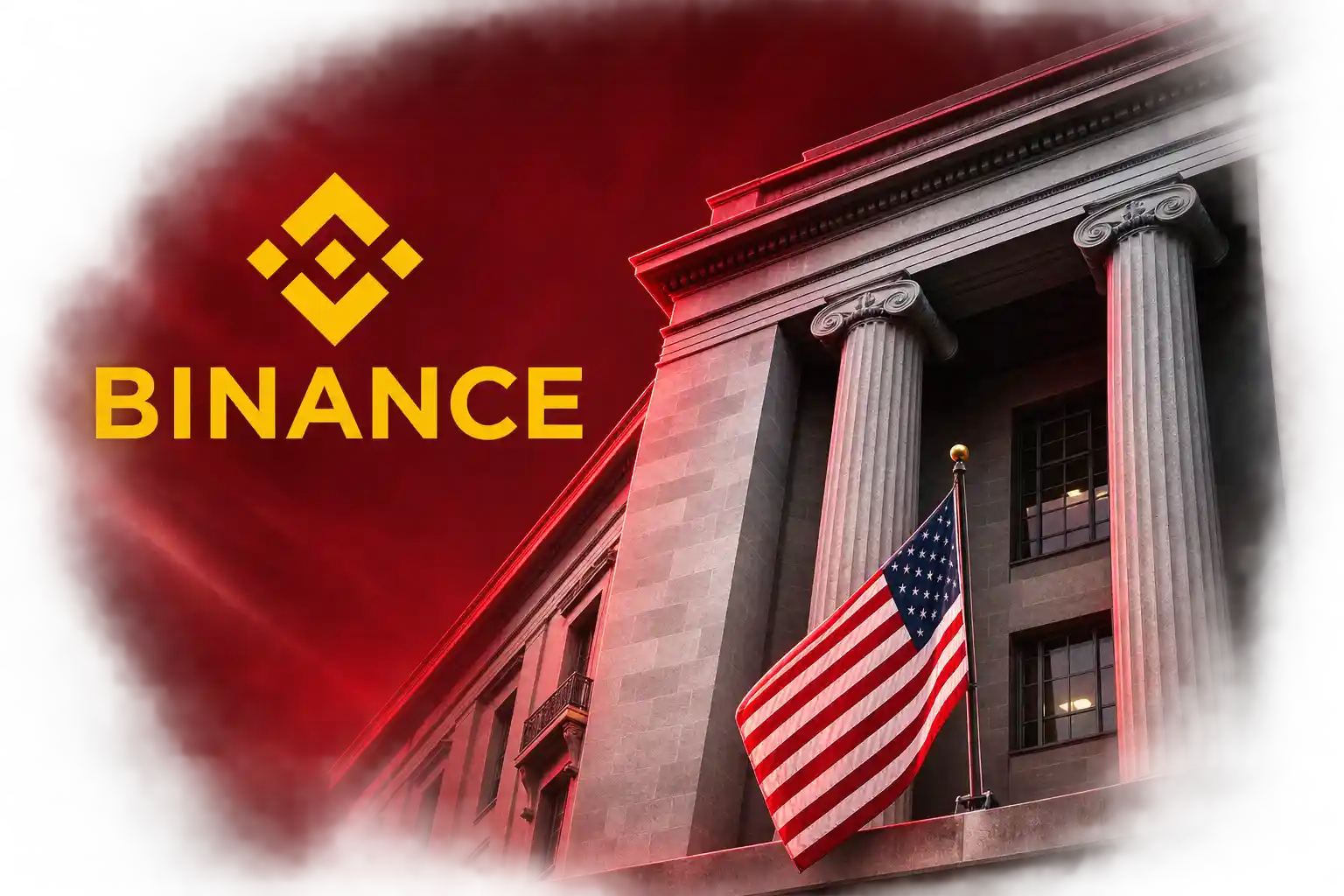
The Hours When Tether and Circle Hit Freeze
Native bitcoin and ether have no company that can stop a transfer. Dollar tokens do. TRM Labs, writing on October 30, said the window that matters is the gap between theft and conversion, and that North Korea’s laundering is built to close it. On this heist the issuers moved inside hours.
TRM’s 00:30 UTC snapshot on October 30 is the clean breakdown of who actually stopped which tokens, and it adds up to nearly $2.7 billion, matching the later combined figure the Justice Department used.
ISSUER FREEZES AS OF OCT. 30
| Who froze | What stopped |
|---|---|
| Tether | about 1.77 billion USDT |
| Circle | about 825 million USDC |
| Ripple | 40.5 million RLUSD (about 48 million RLUSD sold first) |
| World Liberty Financial | 27.8 million USD1 |
| Arbitrum Security Council | about $30 million |
Those five actions, not a courtroom, produced the pile Duva called about half the breach. The November 12 order then picked more than $1.2 billion out of that pile for seizure or restraint. The rest of the freeze still sits with issuers and partners until forfeiture papers name an owner.
TRM also said the Binance coins did not follow the bridge-heavy path seen after the Bybit theft. Analysts watched sales to market makers through intent-based contracts, borrowing against stolen collateral on Aave and JustLend, and sales on decentralized exchanges. The next expected hop is still bridges, swap desks, and over-the-counter brokers.
Ether and Bitcoin Have No Issuer to Call
The freeze worked on tokens a company can blacklist. It did not work on the coins the FBI already expected TraderTraitor to hold. The October 31 alert said the group was converting stolen assets primarily into ether, then pushing them through DeFi and instant swap services for later stages.
As of 00:30 UTC on October 30, TRM found the attacker still held more than 420,000 ETH and 18,270 BTC, about $2.4 billion, in assets with no issuer to freeze them. That stack is the part of the heist a court order on frozen dollar tokens cannot touch unless someone later deposits it at a venue that will hold it.
TRM’s method note on the theft itself is about keys, not a bug. The firm said the attacker used 50 pre-signed authorizations on Ethereum and likely gained the ability to make Binance’s hot-wallet signing system sign across chains. Preparation showed up at least 36 hours earlier as small Tornado Cash withdrawals that funded an operator wallet, a pattern TRM had also seen in the Bybit and KelpDAO thefts.
Counting only the November 12 court figure as “the recovery” misses both facts. The larger stop was the issuer freeze. The coins that were swapped into ether and bitcoin before that freeze never entered it.
A Library of 900 Stolen Faces
The same Thursday notice treated FaceStealer as a separate North Korean operation, not a sequel to the Binance drain. The FBI ties it to actors known in industry reporting as Sapphire Sleet, UNC1069, Dangerous Password, CryptoCore, APT38, BlueNoroff, and Stardust Chollima. Over 18 months the scheme took more than $400 million in cryptocurrency, the bureau said, and it is now aimed at open-source maintainers as well as crypto staff.
FBI Cyber Branch Operations Director Brett Leatherman said North Korean cyber actors used FaceStealer to target people in cryptocurrency and Web3 “through deceptive social engineering tactics,” and that the bureau is still trying to impose cost on those actors. Assistant Director in Charge Patrick Grandy of the Los Angeles field office, which led the case with Assistant U.S. Attorney Khaldoun Shobaki, described the lure in plain terms.
North Korea’s FaceStealer is a highly effective social engineering scheme capable of deceiving even the most experienced technical and security conscious computer user. It exploits our trust in ubiquitous video conference platforms and valued personal relationships. If you can’t imagine a scenario where you might fall prey to it, you are not thinking creatively enough.
Patrick Grandy, Assistant Director in Charge, FBI Los Angeles Field Office
The bureau’s public page walks through imposter video conferencing platforms, secretly recorded webcam video, and the follow-on intrusion. A federal warrant let agents seize over 900 webcam videos of FaceStealer victims in crypto and Web3 around the world. The FBI also posted a FLASH on the 900-video library with the mechanics and what a target should do after a bad call.
HOW FACESTEALER RUNS A CALL
- The recording: Actors compromise a first victim and secretly record that person’s webcam.
- The hijack: They take over communication accounts, including Telegram, LinkedIn, Slack, and Discord, and write to the victim’s contacts.
- The fake room: A new target gets a meeting link on a lookalike of Zoom, Microsoft Teams, or Google Meet.
- The trusted face: Hackers play the prerecorded video, or a deepfake of a known crypto figure, so the call looks like a real catch-up, then invent an audio glitch.
- The fix: The “repair” link installs malware. In several cases they stole crypto and hijacked accounts months to more than a year later, then used the new contact list to repeat the loop.
The FBI says the same technique is being used on people who maintain open-source software, in a bid to reach repository accounts and push bad code downstream. Cloud systems used in the scheme were seized. The 900-video library is now in FBI hands. The targeting advice still runs to anyone who holds crypto or ships code.
The FBI is warning the public about FaceStealer, a highly effective social engineering scheme used by North Korean cyber actors to steal cryptocurrency and target the software supply chain. FaceStealer uses imposter versions of video conference platforms, secretly recorded web… pic.twitter.com/3UuMRgBajt
— FBI Cyber Branch (@FBICyberBranch) November 12, 2026
Binance Is Buying the Tokens Back
Customer balances and the stolen coins are two different ledgers. On October 31 Binance said it had set aside more than $6.34 billion of company funds to cover hacked losses and that the covered amount was up to 90%. BTC, ETH, USDT, BNB, SOL, USDC, XRP, USD1, RLUSD, and ZEC were fully backed, it said, and the rest were less liquid tokens still being bought in the market and over the counter.
The exchange wrote that it “will absorb the financial impact of these stolen funds, not our users.” The refill used a partial draw on the Secure Asset Fund for Users, a portion of the futures insurance fund, and the corporate treasury. Binance also said it would put SAFU back to about $1 billion after that draw and posted a new proof-of-reserves snapshot taken at 00:00 UTC on October 31.
That book-entry cover is why users could see 100% backing on named tokens while TraderTraitor still held ether and bitcoin. Replacing a token on Binance’s balance sheet does not claw the original coin out of a North Korean wallet. It just means the hole on the exchange is filled with other inventory.
What the Remaining Billions Fund
North Korea-backed hackers have stolen about $12.8 billion in crypto since 2017, TRM Labs found, across 100 incidents through October 29, 2026, and $7.4 billion of that came in 2026. That share is now 85% of all hacked crypto value this year, up from 63% in 2025 and 7% in 2020. All crypto hacking in 2026 had already reached $8.7 billion when TRM published, the highest on its record, with Binance doing most of the lift.
NORTH KOREA’S CRYPTO HAUL
- Since 2017: about $12.8 billion stolen in 100 incidents, per TRM through October 29, 2026.
- 2026 alone: $7.4 billion, enough for 85% of global hack value year to date.
- Bybit, February 2025: $1.5 billion, also attributed by the FBI to TraderTraitor, the prior record TraderTraitor job.
- FaceStealer, 18 months: more than $400 million in a separate social-engineering line the FBI ties to the APT38 and BlueNoroff cluster.
TRM’s longer point is that North Korea does not live on smart-contract bugs. Only 13 of its 100 attributed incidents are code exploits, about 1% of what it has stolen. Including Binance, 88% of its stolen value comes from infrastructure attacks on keys, servers, and signing systems, reached through people: fake recruiters, coding tests that drop malware, then SSH keys, session cookies, and cloud tokens.
Proctor’s weapons line is the policy reason the National Security Division is on a theft case at all. The coins that stay liquid after an issuer freeze are the ones that can still be sold, mixed, or parked until a broker will take them. FaceStealer’s $400 million did not need a hot-wallet breach. It needed a video of someone the next target already trusted.
Forfeiture Goes to a Judge Next
A seizure or restraint order is not a check. In these cases the government files a forfeiture claim, and a judge decides who has a legitimate right to the recovered funds. Binance has already replaced most of the customer inventory from its own books, so the fight in court is over title to frozen tokens, not over whether a user sees a zero.
First Assistant U.S. Attorney Bill Essayli for the Central District of California, where the FaceStealer systems case was filed, said the seizure shows the United States will keep fighting “rogue states who financially gain from cybercrime.” The Binance coin chase sits in the District of Columbia with the FBI’s Los Angeles office, Cyber Division, and Virtual Asset Unit, working with the Secret Service and IRS-CI.
The November 12 file puts more than $1.2 billion of already frozen Binance proceeds under court control, leaves the rest of the more than $2.7 billion freeze in place, and takes FaceStealer’s cloud kit and 900 videos offline. The ether and bitcoin TRM saw in the attacker’s wallets on October 30 still have no issuer who can hit a freeze button, and the FBI is still asking nodes and desks to block the next hop.
Disclaimer: This article is news reporting on law-enforcement actions and industry figures. It is for information only and is not legal, investment, tax, or trading advice, and it is not a prediction of whether frozen coins will be returned, forfeited, or lost. Readers who hold crypto, run an exchange or wallet service, or think they were on a FaceStealer call should speak with a qualified attorney and, where money is at stake, a licensed financial adviser before they act. Amounts, court status, and attribution reflect the Justice Department, FBI, Binance, and TRM Labs materials cited here as of the dates on those documents and can change as tracing and forfeiture continue.

Xiaomi 18 Pro Goes Global as Its Privacy Filter Falters

iFixit Finds HomeView Glued Shut After Repair Gains

Polymetallic Nodules Shelter 4,139 Animals Miners Want

One UI 9.5 Puts Now Brief Behind a System Agent

Framework’s $99 Keyboard Brings Laptop Repair to the Couch

Microsoft 365 Auth Fault Took Down Exchange and Teams

OpenClaw 2.0 Ships a Team Workplace With Host-Trust Defaults

Xbox Caps Game Pass Cloud Gaming at 15 Hours

OpenAI Unveils GPT-6 Astra With a Critical Cyber Label

Squishy Dumpling Toys Recalled After Hiding Illegal Water Beads
-
 NEWS3 months ago
Microsoft 365 Auth Fault Took Down Exchange and Teams
-
 GAMING3 months ago
Xbox Caps Game Pass Cloud Gaming at 15 Hours
-
 NEWS3 months ago
OpenClaw 2.0 Ships a Team Workplace With Host-Trust Defaults
-
 NEWS3 months ago
OpenAI Unveils GPT-6 Astra With a Critical Cyber Label
-
 LIFESTYLE3 months ago
Squishy Dumpling Toys Recalled After Hiding Illegal Water Beads
-

 BUSINESS3 months ago
Diesel Breaks Its Record as the White House Claims Credit
-

 NEWS3 months ago
IFA 2026’s Weird Gadgets Are Building a Sensor Home
-
 BUSINESS3 months ago
ChargePoint Stock Rally Prices Wilmer’s Three-Year Cash Plan