
BUSINESS
Dollar General’s Known Pricing Gaps Reach Federal Court
After seven state deals totaling $6.76 million, the FTC and 20 states say Dollar General still charged more at the register than it posted on the shelf.

The Federal Trade Commission and 20 states sued Dollar General on October 26, accusing the chain of charging more at the register than it posted on shelves, tags and ads. The 95-page complaint, filed in the U.S. District Court for the Middle District of Tennessee, says the company had years of notice and still left the mismatch in place.
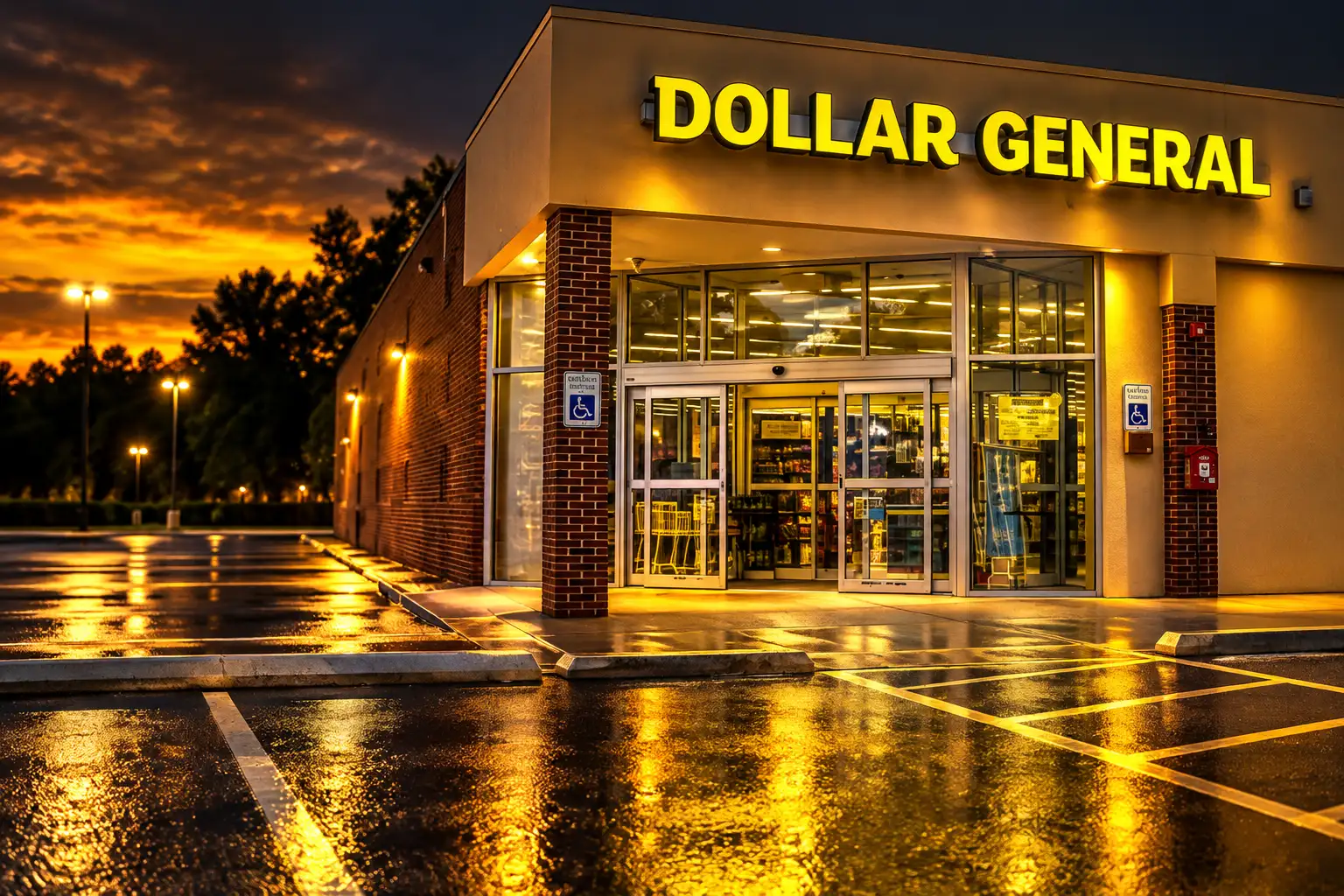
Dollar General told investors it had 20,893 stores at the end of January 2026. About 80 percent of them sit in towns of 20,000 people or fewer. The shoppers who use those aisles are the ones the complaint says paid the extra cents and dollars.
Inspectors Found Overcharges on Everyday Staples
The FTC and its state partners sued Dollar General for deceptive pricing after undercover buys, failed state audits, and a pile of customer complaints that the chain itself logged. From January 1, 2023, through March 31, 2026, the company recorded 29,265 complaints about marked prices it did not honor, filed from all 48 states where it operates.
Between January 16 and April 1, 2026, FTC investigators paid with credit cards at stores in Ohio, Pennsylvania, Missouri, and Maryland. Every trip produced a net overcharge. In Cleveland on January 16, 13 of 58 items rang up at a different price than the shelf or the package, a 22.4 percent error rate, with a net overcharge of $3.25. In Sharpsburg, Pennsylvania, on March 11, 6 of 60 items were off, a 10 percent error rate, with a net overcharge of $2.60.
FTC UNDERCOVER CHECKOUTS IN 2026
| Store | Date | Items off | Error rate | Net overcharge |
|---|---|---|---|---|
| Cleveland, Ohio | January 16, 2026 | 13 of 58 | 22.4% | $3.25 |
| Sharpsburg, Pennsylvania | March 11, 2026 | 6 of 60 | 10% | $2.60 |
Shoppers described the same gap on milk, eggs, bread, and coffee. An Ohio customer said a carton of eggs listed at $5.10 rang up at $6.35 and that the cashier did not fix it. Another Ohio ticket listed milk at $3.95 on the shelf and $4.25 at the till. A Wisconsin customer said the weekly flyer advertised Folgers at 2 for $11; the register charged $11.25 each, and a manager said the deal did not cover decaf. A Pennsylvania customer said 2-liter sodas advertised at 5 for $5 rang up at $2.95 apiece.
State inspectors kept failing stores against the usual 98 percent pass line. Wisconsin’s 2023 checks found overcharges on 662 of 7,344 products, 9 percent of the sample, at an average of 17 percent above the posted price. From January 19 through February 26, 2026, inspectors in that state surveyed 279 Dollar General stores and still found 290 products scanning high. New Mexico failed 53 percent of 73 inspections in early 2026. Lake County, Ohio, failed 50 percent of audits from January 1 through March 22, 2026, and still failed 36 percent of the return visits; more than 75 percent of those errors were overcharges. Louisiana stores failed 144 pricing audits and drew $176,850 in fines. In Glasgow, Kentucky, on April 6, 2023, 20 of 50 products were wrong, a 40 percent miss, and every error was an overcharge totaling $15.70.
Most states run those visits with a national price-verification exam procedure written for weights-and-measures offices. A store generally fails when more than 2 percent of sampled items do not match the posted price. Dollar General’s own weekly circulars, shelf placards, app, and website are the prices the complaint says customers were entitled to get.
Seven Settlements That Added Up to $6.76 Million
The federal case did not arrive as a first warning. Between 2019 and 2025 the company resolved seven inaccurate-pricing actions with six states. The payments listed in the complaint add up to $6.76 million, and several of those deals already ordered the chain to honor the lowest posted price.
PRICING DEALS BEFORE THE FTC FILED
- 2019: Reaches a $10,586 deal with Wisconsin and a $1.75 million deal with Vermont.
- 2023: Pays Wisconsin another $850,000, New Jersey $1.2 million, and Ohio $1 million.
- 2025: Pays Colorado $400,000 and Pennsylvania $1.55 million, and agrees in those two states to post signs promising the lowest price when tags and scanners disagree.
Ohio and New Jersey took the money in 2023 and still joined the FTC in 2026. Wisconsin settled twice and joined anyway. Colorado and Pennsylvania, which already extracted signage orders, stayed out of the new complaint. The pattern is not that states never noticed. It is that the notices did not stop the mismatches.
A December 2025 investigation of failed inspections, the complaint says, was “the subject of significant internal deliberation and discussions” inside the company. In an earlier Ohio case, Dollar General’s lawyers argued that matching shelf prices and scanned prices 100 percent of the time is virtually impossible. The new filing treats that gap as a choice about staffing and follow-through, not as an unavoidable rounding error.
The Tuesday Shift That Stores Could Not Staff
Dollar General changes prices on a weekly cycle. Stores are supposed to pull old shelf labels and put up new ones on a five-hour “Compliance Tuesday” shift, then swap promotional signs on Saturday evenings. The complaint says those paper policies “achieve little in practice” because the company does not track whether the new labels actually go on the shelf.
Stores, it says, are “too thinly staffed” to print and affix the tags. A news clip sent to the chief executive quoted a former assistant manager in Illinois: “You’re lucky if you get to work two to four hours of your eight-to 13-hour shift with another human being.” Weekly and quarterly internal reports, the filing adds, already showed that many stores did not update labels on time, or at all.
Customers who caught the higher ring-up often got nowhere at the counter. The complaint says employees in many instances refused to correct the price even though company policy, and at least two state settlements, told them to honor the lowest figure. Prices flash quickly on the checkout screen. People paying with debit cards, which several of the cited complaints did, may not see the miss until they are home.
That is the operational core of the reckoning. The chain built a low-cost box that turns inventory fast, then asked a short crew to keep thousands of paper tags in sync with a register file that updates from headquarters. When the tags lagged, the register won. The people who lost were standing in a store that markets itself as the place to stretch a dollar.
Where the Next Grocery Is Miles Away
Dollar General’s own filings and the complaint describe the same customer. Households earning $35,000 or less account for 60 percent of the company’s revenue. The chain sells about 2,000 items for $1 or less. Net sales were $42.7 billion in 2025. The chief executive has described core shoppers as people who “run out of money before the month runs out.”
THE BASE THE CHAIN SAYS IT SERVES
- Small towns: About 80 percent of stores are in towns of 20,000 people or fewer.
- Distance: Roughly 75 percent of the U.S. population lives within five miles of a Dollar General.
- Income mix: Households at $35,000 or less supply 60 percent of revenue.
- Dollar aisle: About 2,000 items are priced at $1 or less.
A Pennsylvania customer told the company the store was within 3 miles of home and that the next place to shop was much farther. For that person, a soda deal that dies at the register is not a trivia miss. It is the posted budget for the week. The complaint puts it in the agency’s own words: the company shifted “the burden of its own operational shortcomings onto the very communities and consumers who can least afford it.”
Christopher Mufarrige, director of the FTC’s Bureau of Consumer Protection, said the chain “has betrayed the trust of millions of American consumers and imposed significant financial harm on communities and consumers who are already struggling to make their paychecks last.” The Commission voted 2-0 to file. The plaintiff states run from Alabama and Arizona through Wisconsin and include Tennessee, where Dollar General is based in Goodlettsville.
New York Settled for $1.875 Million in Groceries
Eleven days before the federal complaint, New York closed its own case. Attorney General Letitia James announced on October 15, 2026, that Dollar General would make $1.875 million in food donations to Foodlink, a Rochester nonprofit, after an investigation found regular overcharges. New York is not among the 20 states in the Tennessee case.
James’s office reviewed more than 900 weights-and-measures reports and found that 43 percent documented failure rates above 2 percent in 2021 through 2023. Secret shoppers then visited 11 stores in Western New York and were overcharged on about 14 percent of the items they bought. Receipts, the office said, were hard to parse: some showed only the full price, some only the net after deals, and some showed neither.
WHAT NEW YORK FORCED ONTO PAPER
- Lowest price rule: Honor the lowest of the tag, the shelf, the ad, or the register.
- Labor: Put staff on shelf-tag updates and train every New York employee on price accuracy.
- Audits: Hire an independent auditor to hit every New York store twice a fiscal year, plus 15 random flyer-to-shelf checks.
- Speed: Fix every miss found by inspectors, auditors, or district managers within 24 hours.
The New York money goes to a food bank, not back to the shoppers who were overcharged. The federal complaint, by contrast, asks for a permanent injunction, a monetary judgment, civil penalties, and other relief that can include restitution. That difference is why the Nashville case is larger than another round of state fines. It is an attempt to put a nationwide rule on a problem states have been fining store by store.
Dollar General Calls the Harm Figure Untethered
Dollar General’s public statement on October 26 rejected the idea that it had walked away from low prices. Shares closed that day at $128.42, down $4.27, or 3.22 percent.
Our goal is 100% accuracy between shelf and register prices in every store. As with other retailers and despite our policies and procedures, occasional price discrepancies can occur.
Dollar General, company statement, October 26, 2026
The company said store teams are “instructed, empowered, and expected to make things right” when a miss happens, and that it has tightened its price-accuracy process in recent years. It also sketched a short, angry timeline of the FTC probe. A civil investigative demand dated January 30, 2026, arrived in early February. Dollar General says it turned over more than 200,000 documents and over 350 gigabytes of data. On September 23, three days after sworn testimony ended, staff sent a draft complaint and a settlement demand the company called “untethered to, and orders of magnitude larger than, any realistic assessment of amounts attributable to pricing discrepancies.”
The legal fight that may decide the size of that bill is not only the FTC Act. The complaint also cites the Gramm-Leach-Bliley Act, which bars a false statement to a customer of a financial institution in order to obtain that customer’s bank information. Investigators paid with cards. Several of the cited shoppers paid with debit cards. Dollar General says that reading of the statute “will not survive a challenge in court.” In an intends to vigorously defend this matter filing signed by general counsel Rhonda M. Taylor, the company warned that if it loses, the result “could have a material adverse effect on the Company’s consolidated financial statements as a whole.”
The company says it was surprised when the FTC filed instead of answering a counteroffer, and that it learned only then that 20 states had joined. It still says it is willing to talk. The case is pending. For now the record in the complaint is the one that matters on the shop floor: a weekly label job, a short crew, and a register that kept the higher number.
Disclaimer: This article is news reporting on a pending civil case and related company disclosures. It is for information only and is not legal advice, investment advice, or a prediction of how the court will rule. Readers who think they were overcharged, or who hold Dollar General securities, should consult a qualified attorney or a licensed financial adviser before taking any action. Figures, case status, and company statements reflect the public filings and releases cited here as of the dates on those documents and may change as the litigation proceeds.

Xiaomi 18 Pro Goes Global as Its Privacy Filter Falters

iFixit Finds HomeView Glued Shut After Repair Gains

Polymetallic Nodules Shelter 4,139 Animals Miners Want

One UI 9.5 Puts Now Brief Behind a System Agent

Framework’s $99 Keyboard Brings Laptop Repair to the Couch

Microsoft 365 Auth Fault Took Down Exchange and Teams

OpenClaw 2.0 Ships a Team Workplace With Host-Trust Defaults

Xbox Caps Game Pass Cloud Gaming at 15 Hours

OpenAI Unveils GPT-6 Astra With a Critical Cyber Label

Squishy Dumpling Toys Recalled After Hiding Illegal Water Beads
-
 NEWS3 months ago
Microsoft 365 Auth Fault Took Down Exchange and Teams
-
 GAMING3 months ago
Xbox Caps Game Pass Cloud Gaming at 15 Hours
-
 NEWS3 months ago
OpenClaw 2.0 Ships a Team Workplace With Host-Trust Defaults
-
 NEWS3 months ago
OpenAI Unveils GPT-6 Astra With a Critical Cyber Label
-
 LIFESTYLE3 months ago
Squishy Dumpling Toys Recalled After Hiding Illegal Water Beads
-

 BUSINESS3 months ago
Diesel Breaks Its Record as the White House Claims Credit
-

 NEWS3 months ago
IFA 2026’s Weird Gadgets Are Building a Sensor Home
-

 BUSINESS3 months ago
ChargePoint Stock Rally Prices Wilmer’s Three-Year Cash Plan