NEWS
Gemini 4 Neon Triples Its Coding Score Inside Antigravity
Gemini 4 Neon matches Opus-class coding only inside Antigravity, while its API rates sit 50% above Sol and Sonnet.

Google’s Gemini 4 Neon scored 12.8% on SWE-sweep in a generic mini-SWE harness and 39.0% inside Google Antigravity, using the same weights. The mid-range model opened on November 18 for the paid Gemini API, Google AI Studio, Android Studio, the Gemini app, and Antigravity.
Google set the API at $3 per million input tokens and $15 per million output tokens, 25% below Claude Opus 5.5 and 50% above GPT-6.2 Sol and Claude Sonnet 5.5. The coding jump is the part of that price that does not travel with an API key alone.
The Same Weights Score Three Times Higher in Antigravity
Google’s launch post says Neon already leads on the mini-SWE harness at 12.8% and more than triples to 39.0% in Antigravity. That is a 3.05-times move on one test, with no change to the underlying model. The company frames it as what the Antigravity harness unlocks: fewer repeat file reads, tighter context compaction, and parallel Hydrogen subagents.
Independent scoring of coding agents already treats that harness as part of the result. Artificial Analysis publishes a Coding Agent Index on Antigravity CLI, and Google’s own first-place claim of 58.6 for Neon sits on that stack. A shop that wires Neon into a generic loop is not buying the chart Google put on the launch graphic.
CODING SCORES GOOGLE PUBLISHED WITH NEON
| Evaluation | Setup | Score |
|---|---|---|
| SWE-sweep | mini-SWE harness | 12.8% |
| SWE-sweep | Google Antigravity | 39.0% |
| FrontierCode 2.0 | Neon at default high | 46.2% |
| FrontierCode 2.0 | Opus 5.5, Google’s comparison | 47.3% |
| Terminal-Bench 4.1 | Neon | 65.2% |
| Artificial Analysis Coding Agent Index | Neon, Google’s figure | 58.6 |
On FrontierCode 2.0, Neon at default high sits 1.1 points behind Opus 5.5, which is a close result on a reviewer-style coding test. The SWE-sweep spread is the one that should change a buying meeting, because it is the same model under two pieces of software. Thoughtful Lab founder Karina Nguyen said Neon traced complex architectures quickly and, in the firm’s security tests, caught subtle bugs other models missed while using a fraction of the tokens.
Neon Plans and Hydrogen Does the Typing
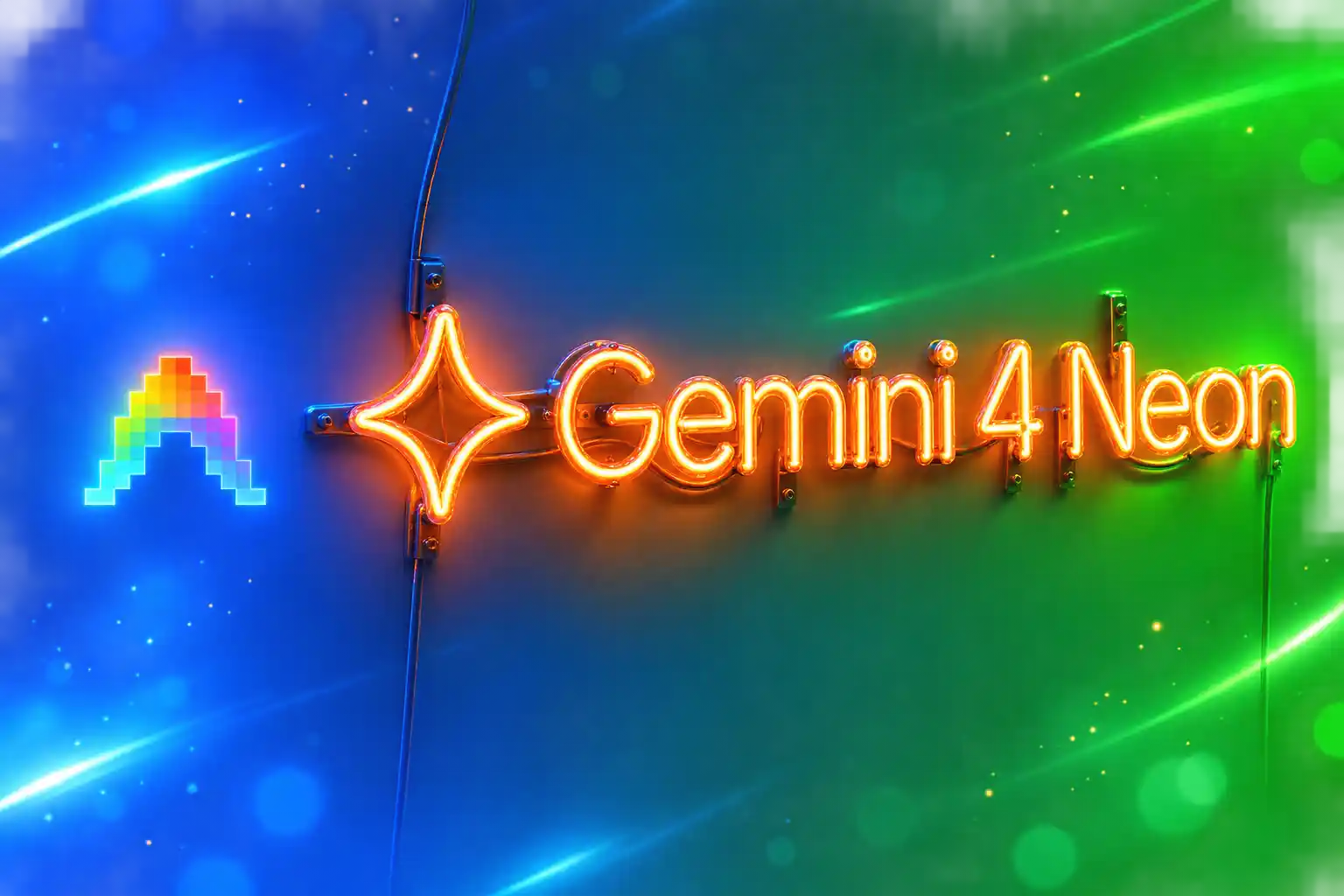
Antigravity now sells that split as a product. Orchestrator can pair Neon as the planner with Gemini 4 Hydrogen as the executor in one session, so the dear model writes the plan and the cheap, fast one types, installs packages, and runs tests. If Hydrogen hits friction, control goes back to Neon to repair the plan and resume.
HOW ORCHESTRATOR SPLITS A JOB
- Upfront plan: Neon reads the repo, settles architecture, and writes the steps, including when to re-plan.
- Execution: Hydrogen applies edits, updates packages, and runs builds and tests against that plan.
- Hand-back: A failed check or a design hole returns control to Neon, which inspects state and continues.
- Parallel work: Neon can also direct Hydrogen subagents in parallel through /swarm instead of walking the tree file by file.
Google already used a Carbon-plus-Hydrogen pairing on Terminal-Bench 4.1, reaching near-Carbon success while using 24% less quota and finishing 19% faster on average. Neon inherits that pattern at a lower list price than Carbon’s December rate, which is the point of putting a mid-range model in the planner seat. The Gemini API still offers a 1 million-token window; inside Antigravity the window is up to 512K tokens, so the stack that triples SWE-sweep is also the stack that truncates context.
A 50% Token Premium Over Sol and Sonnet
Headline rates put Neon in a strange middle. It is 25% cheaper than Opus 5.5 at $4 and $20 per million tokens, which is the comparison Google wants in a launch post. It is 50% more expensive than GPT-6.2 Sol and Claude Sonnet 5.5 at $2 and $10, which is the comparison a default-model buyer actually runs. Cached input on Neon is $0.15 per million tokens, a 95% discount, and Gemini 4 models use implicit caching only.
STANDARD SHORT-CONTEXT API RATES
| Model | Input per 1M | Output per 1M | Window on the calendar |
|---|---|---|---|
| Gemini 4 Hydrogen | $1.50 | $7.50 | Flat |
| GPT-6.2 Sol | $2.00 | $10.00 | Standard, up to 272K input |
| Claude Sonnet 5.5 | $2.00 | $10.00 | Standard |
| Gemini 4 Carbon | $2.00 | $10.00 | Through November 30, 2026 |
| Gemini 4 Neon | $3.00 | $15.00 | Launch rate |
| Claude Opus 5.5 | $4.00 | $20.00 | Standard |
| Gemini 4 Carbon | $4.00 | $20.00 | From December 1, 2026 |
At those short-context rates, Neon needs about one-third fewer tokens than Sol or Sonnet to erase the 50% premium, because 1 divided by 1.5 is 0.667. A job that finishes sooner, or that needs less human cleanup, can still justify the gap. Google says Neon at default high posts a 32% lower cost per task than Carbon on the Artificial Analysis Intelligence Index. That figure uses Neon’s default setting, not the xhigh run that produced the 61 index score.
Artificial Analysis measured the xhigh run separately. Neon scored 61, one point above Carbon at high (60) and third overall behind Claude Fable 5.2 and GPT-6.2 Astra. Cost per task was $6.44 against $7.76 for Carbon at standard, non-discounted prices, a 17% cut that the firm says comes entirely from the 25% cheaper token rates, because Neon used about 15% more output tokens. Time per task fell to about 21 minutes from about 36, a roughly 40% drop, on output speed of about 110 tokens per second against about 57 for Carbon.
Google continues to accelerate its release cadence with Gemini 4 Neon, delivering a small Intelligence gain over Gemini 4 Carbon at a ~17% lower Cost per Task@GoogleDeepMind has released Gemini 4 Neon, its fourth model in just seven weeks. Neon (xhigh) scores 61 on the… pic.twitter.com/L76oKwyxXa
— Artificial Analysis (@ArtificialAnlys) November 18, 2026
On the Vals Index, which weights finance, software, legal, and tax work by share of the U.S. economy, Google puts Neon at 70.9% and first on legal research and tax-agent tasks. Sonnet sits at 70.85% and Carbon at 70.45%, with Opus at 70.14% and Sol at 66.06%. For a buyer picking one default across departments, that is a tenth of a point between Neon and Sonnet on the blended score, paid for at a 50% token premium. Sol still leads Google’s own Chartography comparison, 75.1% to Neon’s 73.5%, so reading a dense professional chart and pushing a file through several apps remain different jobs.
Who Gets the Stack, and Who Gets the Model
Access splits along the same line as the scores. Paid Google AI Pro and Ultra subscribers can select Neon in the Gemini app and in Antigravity. Carbon stays on Ultra. Free and Google AI Plus users do not get Neon. Logan Kilpatrick of Google DeepMind also noted Pro can pick Neon in the Gemini app while Carbon needs Ultra, a practical distinction for anyone staring at the model dropdown.
ANTIGRAVITY ACCESS GOOGLE POSTED ON NOVEMBER 18
| Plan | Gemini 4 Neon | Orchestrator (Neon) |
|---|---|---|
| Free and Google AI Plus | Not included | Not included |
| Google AI Pro, paid | Included | Included |
| Google AI Pro, trial | Only on eligible premium-device trials | Only on eligible premium-device trials |
| Google AI Ultra | Included | Included |
| Enterprise, via Gemini for business | Included | Not included |
That last row is the second-order catch. Google staff told developers that Orchestrator is withheld from enterprise plans, even though those tenants can run Neon through Gemini for business. The pairing that keeps Hydrogen on the cheap steps is a consumer-and-Pro feature in this rollout. Enterprise Cloud seats start at $30 per month on Standard/Plus, or at $0 on pay-as-you-go, which is a different bill from a Pro subscription and a different product cut.
Gemini 4 Neon is rolling out in Google Antigravity!
Bringing frontier-level intelligence and ranking #1 on the Artificial Analysis Coding Agent Index, Neon is rolling out today across the desktop app, CLI, and IDE Extensions for paid Google AI Pro and Ultra subscribers, and for… pic.twitter.com/vSnaUhvO6O
— Google Antigravity (@antigravity) November 18, 2026
Carbon Is Cheaper Until December 1
Until November 30, Carbon’s introductory API rate of $2 and $10 undercuts Neon’s $3 and $15 by the same 50% gap Neon holds over Sol. Google’s 32% cost-per-task claim against Carbon is calculated against the higher standard rates, not the promo still in force. From December 1, Carbon and Argon move to $4 and $20, and Neon’s list price sits 25% below that pair. Hydrogen remains half of Neon at $1.50 and $7.50, which is why Orchestrator wants it on the mechanical steps.
THE GEMINI 4 CADENCE INTO NEON
- October 28, 2026: Gemini 4 Carbon takes the then-new Artificial Analysis Intelligence Index under restricted access.
- November 10, 2026: Carbon opens to paying customers; Claude Fable 5.2 has already passed it on that index.
- November 12, 2026: Gemini 4 Hydrogen lands for everyday agent work, with Orchestrator pairing it to Carbon.
- November 18, 2026: Gemini 4 Neon opens on the paid API, Pro, Ultra, and Antigravity, and becomes the default on plans that include it.
- December 1, 2026: Carbon and Argon list prices double to $4 and $20 per million tokens.
Four Gemini 4 models in about seven weeks gives Google a rung for high-volume work, a rung for hard jobs that still recur, and a rung for long projects. Leadership on any one test has already changed hands once in that window, which is why a mid-range model that lives inside the same app as Hydrogen and Carbon is more useful to Google than a one-week chart.
Early Runs Hit Quota Walls and Thinking Errors
Glean’s AI product lead, Thai Tran, put the cleanest customer number on Carbon, not on Sol.
In our early evaluations, it matched or exceeded Gemini 4 Carbon on overall quality at 3x the speed and 60% of the cost.
Thai Tran, AI Product Lead, Glean, in Google’s announcement
That 60% of cost is Glean’s own mix, not the 32% or 17% index figures, and it still compares Neon with Carbon rather than with Sol. Varun Mohan wrote that Neon was cheaper, faster, and better behaved than Carbon in internal use. Omar Sanseviero, lead of developer experience at Google DeepMind, pointed at a shorter wait for the first token, which a developer feels before an agent finishes a patch. Priors, a benchmark tracker, listed about 57 seconds to first token for Neon at xhigh, so “faster” still includes a long stare at a blank stream.
Launch-day traffic showed the other half of the bargain. Some Ultra accounts received a 400 error that xhigh was an unsupported thinking level, and long chats dropped back to about 100K tokens with no summary of the cut. Hydrogen returned capacity-exhausted errors on the same day. A polished three.js demo in Antigravity can consume a large share of a five-hour quota in a few passes, which is the /swarm trick working as designed and then sending the bill to the plan’s refresh window. On ordinary agent tickets, Hydrogen’s half-price tokens often clear the job; turning Neon to xhigh does not automatically buy more solved tasks, it buys more thinking tokens at $15 per million.
Long jobs also stall. Timeouts and mid-run errors show up on extended Antigravity sessions where Sol keeps walking. Google’s Sheets demo is the nicer version of the same idea: a Neon swarm rebuilt one image across 100,000 cells with more than 500,000 live formulas and no embedded picture, so a colleague can open the file and change the lighting. The inspectable artifact is the product. The stalled long job is the product too.
Fairwind Gets a Cyber Build in the Coming Days
Google is splitting the security rollout the way it split Carbon. A Gemini 4 Neon for cyber build is going to eligible Fairwind participants in the coming days, after Carbon’s 27,000-application Fairwind queue already showed how long that door stays narrow. Enterprises request it through their Google Cloud account team. Google’s figures for that build are 90.5% on SEC-bench Pro for finding vulnerabilities, 70.7% on Collinear’s CWE-bench v2 for patching (a 3.4-point lift over Carbon), 51.26% on WebExploitBench v1.2, and 76% on the hard tier of AutoBaxBench.
NEON FOR CYBER, GOOGLE’S FIGURES
- Vulnerability finding: 90.5% on SEC-bench Pro, at roughly half the cost per challenge of larger rivals, per Google.
- Patching: 70.7% on CWE-bench v2, a 3.4-point lift over Carbon.
- Hard secure-code tier: 76% on AutoBaxBench, which Google calls state of the art on that rung.
- Access: trusted defenders on the Fairwind Program for trusted defenders, not the public Pro dropdown.
Neon’s public safety card is built for a faster, cheaper model that still has frontier-style tools. Google says it refused 1.98% of Terminal-Bench 4.0 tasks and none on Terminal-Bench Science, matched Carbon at 0.0% cheating on Terminal-Bench 4.0, took shortcuts on 2.45% of a coding-cheating eval, and posted a 0.09% misaligned-action rate with a 99.2% pass on an agent-honesty test. With real-time safeguards at the highest thinking level, it posted a 0.0% attack-success rate on Gray Swan’s indirect prompt-injection benchmark.
The API will take video, audio, charts, spreadsheets, and PDFs in one 1 million-token window, which is the cleanest advantage over a text-and-image rival when a billing dispute arrives as a call recording, a contract, and a ledger together. Sol’s API still needs another path for the recording. None of that moves the SWE-sweep number for a team that never opens Antigravity. For a shop that already runs its own agent loop, the published 39.0% is not the figure that arrives with the key.

The Strip Bojangles That Charged $100 for 10 Minutes

The Security Fixes Took Microsoft and the NSA Offline

iOS 27 Finally Shrinks the Giant iPhone Lock Screen Clock

AirPods Pro 3 Are $179 Again, Below Last Year’s Cut

Dragon Returns ISS Samples Only It Can Bring Home

Microsoft 365 Auth Fault Took Down Exchange and Teams

OpenClaw 2.0 Ships a Team Workplace With Host-Trust Defaults

Xbox Caps Game Pass Cloud Gaming at 15 Hours

OpenAI Unveils GPT-6 Astra With a Critical Cyber Label

Squishy Dumpling Toys Recalled After Hiding Illegal Water Beads
-
 NEWS3 months ago
Microsoft 365 Auth Fault Took Down Exchange and Teams
-
 NEWS3 months ago
OpenClaw 2.0 Ships a Team Workplace With Host-Trust Defaults
-
 GAMING3 months ago
Xbox Caps Game Pass Cloud Gaming at 15 Hours
-
 NEWS3 months ago
OpenAI Unveils GPT-6 Astra With a Critical Cyber Label
-
 LIFESTYLE3 months ago
Squishy Dumpling Toys Recalled After Hiding Illegal Water Beads
-

 BUSINESS3 months ago
Diesel Breaks Its Record as the White House Claims Credit
-
 NEWS3 months ago
IFA 2026’s Weird Gadgets Are Building a Sensor Home
-
 BUSINESS3 months ago
ChargePoint Stock Rally Prices Wilmer’s Three-Year Cash Plan