
NEWS
The AirTag 2 Four-Pack Hits $17.50 and Changes What You Tag
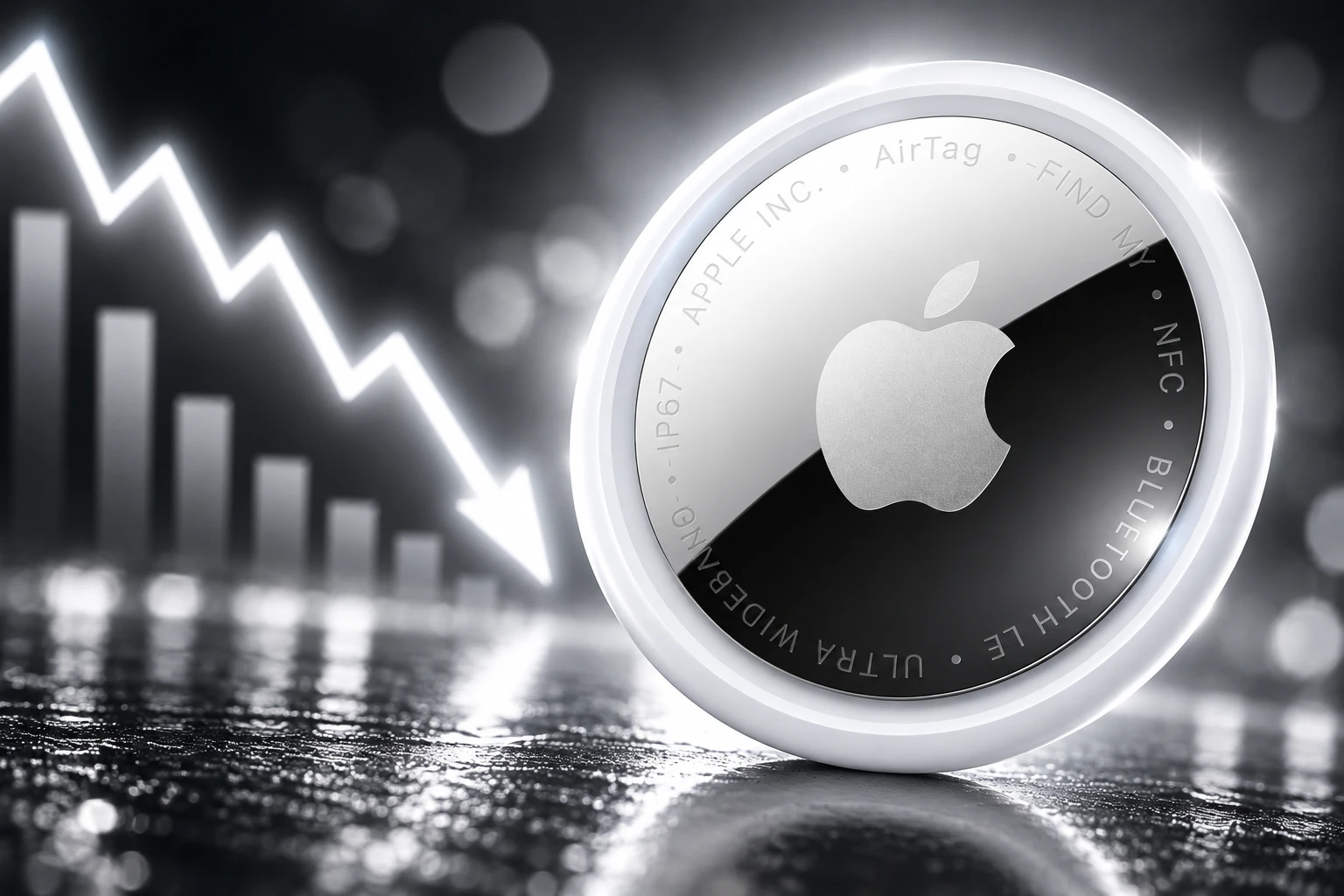
Amazon and Best Buy list the AirTag 2 four-pack at $69.99, or $17.50 each, cheap enough to put the extras in luggage before holiday trips.

Amazon and Best Buy cut the second-generation AirTag four-pack to $69.99 on October 30, or $17.50 a tag. Apple still lists that pack at $99. The $7.25 gap per tag is the first time this model has been cheap enough to treat the extras as luggage kit rather than spare coins in a drawer.
Listings on October 30 and October 31 held at $69.99, which is $29.01 off Apple’s price and a 29 percent cut. A single AirTag 2 is $23 on Amazon, still $5.50 more per tag than the pack.
Four Tags Now Cost $17.50 Each
Apple has sold AirTags the same way since April 30, 2021: $29 for one and $99 for four. The second generation arrived on January 26, 2026, at those exact figures, with free engraving only if you order from Apple. Retailers do the discounting Apple will not.
At $69.99 the pack undercuts Apple’s own four-pack by $29.01 and undercuts a $29 single by $11.50 per tag. The $23 single is a real sale. It is also the worse way to buy if you will use more than one.
AIRTAG 2 STREET PRICES
| Where | What you get | You pay | Per tag |
|---|---|---|---|
| Apple | Four-pack | $99 | $24.75 |
| Apple | Single | $29 | $29 |
| Amazon or Best Buy | Four-pack | $69.99 | $17.50 |
| Amazon | Single | $23 | $23 |
Deal trackers called $69.99 the lowest four-pack price posted since the January launch. Apple’s store did not move. If you want initials or an emoji on the steel, you still pay $99 and wait on Apple’s engraving queue.
Precision Finding on the Wrist
The disc looks like the 2021 model. Diameter is still 1.26 inches (31.9 mm) and height is still 0.31 inch (8.0 mm), so old holders still clip on. Weight rose from 0.39 ounce (11 grams) to 0.42 ounce (11.8 grams). The water rating is still IP67, good for 1 meter for 30 minutes.
Inside, Apple put its second-generation Ultra Wideband chip, the same U2 silicon in the iPhone 17 lineup, iPhone Air, Apple Watch Ultra 3, and Apple Watch Series 11. Precision Finding, the arrow-and-distance guide in Find My, now works from 50 percent farther away than on the first AirTag. An upgraded Bluetooth chip stretches the range when you are not in that close-range mode.
For the first time the watch can run that close-range hunt. Apple Watch Series 9 or later, or Apple Watch Ultra 2 or later, with watchOS 26.2.1, can walk you to the tag with haptics while your phone stays in a pocket. That is the hardware change that makes a fourth tag on a suitcase useful in a baggage hall, when you do not want to juggle a phone and a trolley.
WHAT CHANGED IN THE NEW DISC
- Precision Finding: Apple says the guide works from 50 percent farther away than on the 2021 tag.
- Speaker: The new chime is 50 percent louder and audible from up to twice as far.
- Watch hunt: Series 9 or later and Ultra 2 or later can run Precision Finding on the wrist.
- Battery: Still a user-replaceable CR2032, rated for more than a year, with the same “replace me” alert on iPhone.
Apple’s product page puts a 50 percent louder speaker next to that range claim and says you can hear the tag from up to twice as far. The new chime is meant for couch cushions. It is also meant for a carousel at 11 p.m.
With its updated internal design, the new AirTag is 50 percent louder than the previous generation, enabling users to hear their AirTag from up to 2x farther than before.
Apple, January 26, 2026 newsroom
The Spare One Belongs in Checked Luggage
Find My does the long-distance work the U2 chip cannot. The tag pings nearby iPhones, iPads, and Macs on a network Apple says includes more than a billion devices. Those pings are anonymous and end-to-end encrypted. No location history lives on the disc. When the bag is in another city, you get a map pin, not an arrow.
Share Item Location is the piece that turned that pin into an airline tool. In Find My you create a temporary link that shows the item on a map. Apple says more than 50 airlines accept those links, including Delta, Lufthansa, Singapore Airlines, and United. Sharing stops when the item comes back to you, when you cut it off, or after seven days.
WHAT THE AIRLINE LINK DOES
- The handoff: You send a Find My link to a carrier’s baggage desk instead of describing a black suitcase.
- The clock: The page expires after seven days if you have not already reunited with the bag.
- The lock: Apple says only authorized staff get in, through an Apple Account or partner login.
- The limit: The bag has to be away from you; you cannot mint a link while the tag sits next to your phone.
SITA, the aviation IT firm behind WorldTracer, measured what happens when that link is actually used. Its December 18, 2025 release said the Find My hookup permanently lost luggage by 90 percent for bags whose owners shared location, and that delayed-bag recovery ran 26 percent faster.
The integration of AirTag and Find My Share Item Location technologies with SITA WorldTracer has reduced “permanently lost luggage” by 90 percent.
SITA, December 18, 2025 press release
That is why a $17.50 fourth tag is a different product from a $29 first tag on a keyring. Holiday travel is when bags miss connections. SITA’s June 29, 2026 Baggage IT Insights report said carriers still lose money even after a 23 percent drop in mishandling in 2025: mishandling still costs $6.3 billion a year, against 5 billion passengers, up from 4.8 billion in 2024. Nicole Hogg, SITA’s portfolio director for baggage, said, “Baggage is shifting from a logistical problem to a digital service.”
A four-pack at $17.50 a tag is how a family covers two suitcases, a backpack, and a laptop sleeve without doing the $29 math four times. The louder speaker is how you find the right bag on a belt. The watch arrow is how you do it with your hands full.
Buy the Pack, Skip the $23 Single
The $23 single looks like the low-commitment buy. It is $6 off Apple’s $29 sticker and a genuine record low of its own. The pack still wins on unit price by $5.50, and you only need two tags for the pack to cost less in total than two singles ($35 versus $46).
Android households do not get a vote. AirTag 2 needs an iPhone on iOS 26 or an iPad on iPadOS 26, plus an Apple Account signed into iCloud with Find My switched on. Chipolo’s Find Hub tags and Samsung’s Galaxy SmartTag line exist for other phones. Tile still sells cross-platform discs for mixed homes. None of them sit on Apple’s billion-device crowd or get Precision Finding on an iPhone.
Samsung has a new SmartTag due in the United States in November at a $29.99 list, matching Apple’s single-tag sticker, and is pitching iOS sharing for friends and dog walkers. It still runs on Samsung’s own network. If the people in your house already carry iPhones, the $69.99 AirTag pack is the one that uses the phones they already own.
The pack also ships without a way to clip it to anything. Apple’s FineWoven Key Ring is $35, which is two sale tags. Third-party loops and luggage mounts cost less, and the old 2021 accessories still fit. Budget for holders or the discs sit in a bowl.
What iOS 26 Changes for New Buyers
The compatibility line is easy to miss in a deal post. The new AirTag will not set up on iOS 18 or iOS 25. Apple’s spec sheet is blunt: iPhone with iOS 26.0 or later, or iPad with iPadOS 26.0 or later. An older phone can still help locate someone else’s tag as part of the crowd. It cannot be the owner’s phone.
BEFORE YOU HIT BUY
- The software gate: Setup needs iOS 26 or iPadOS 26 and Find My enabled on the Apple Account.
- The watch extra: Wrist Precision Finding needs Apple Watch Series 9 or later, or Ultra 2 or later, on watchOS 26.2.1.
- The holder: The box contains a tag with a CR2032 already in it, plus paperwork. No loop, no adhesive.
- The engraving trade: Amazon and Best Buy will not stamp initials. That remains an Apple Store checkout option on the $99 pack.
Battery life did not get a new number. Apple still says more than a year on a CR2032 you pop out from the steel cover when iPhone nags you. Replacement cells are cheap. The $17.50 sale price does not change that annual ritual; it just makes it less painful to run four of them.
Lost Mode still works as it did. The tag can show a phone number or email to anyone who taps it with NFC, the same radio in contactless payments. You can also share a tag with up to five other Apple Accounts so a partner can see the same item. That family share is separate from the seven-day airline link.
A Louder Chime Follows the Fourth Tag
Apple designed AirTag for objects, not people, and spent years adding alerts after the first model was used to follow people. A separated tag plays a sound when it moves. iPhones show “AirTag Found Moving With You.” Android 6.0 and later can show unknown-tracker alerts under the joint Apple-Google specification. You can play a sound, use Precision Finding on a UWB iPhone to walk up to a stranger’s tag, and read a serial number over NFC.
Firmware 3.0.45, documented in Apple’s May 29, 2026 firmware note, retuned that unwanted-tracking sound so an unknown AirTag is easier to locate during Precision Finding. A cheaper four-pack means more of those speakers in coat pockets, gift bags, and rental cars. The volume that helps you in the carousel is the same volume that is supposed to give someone else a chance to hear a tag they did not ask for.
Cross-platform alerts are not perfect. They need Bluetooth on, location services on, and airplane mode off. A tag whose speaker has been gutted will not chirp. The $69.99 price does not add new safety software; it just puts four factory speakers into circulation instead of one.
If the pack is for keys, a school backpack, a checked bag, and a camera insert, $17.50 is the right number and gen 2 is the right disc. If you needed one tag for a keyring, the $23 single is enough, and the other three will not help a phone that cannot run iOS 26. Apple’s store will still be at $99 after this listing moves.

Xiaomi 18 Pro Goes Global as Its Privacy Filter Falters

iFixit Finds HomeView Glued Shut After Repair Gains

Polymetallic Nodules Shelter 4,139 Animals Miners Want

One UI 9.5 Puts Now Brief Behind a System Agent

Framework’s $99 Keyboard Brings Laptop Repair to the Couch

Microsoft 365 Auth Fault Took Down Exchange and Teams

OpenClaw 2.0 Ships a Team Workplace With Host-Trust Defaults

Xbox Caps Game Pass Cloud Gaming at 15 Hours

OpenAI Unveils GPT-6 Astra With a Critical Cyber Label

Squishy Dumpling Toys Recalled After Hiding Illegal Water Beads
-
 NEWS3 months ago
Microsoft 365 Auth Fault Took Down Exchange and Teams
-
 NEWS3 months ago
OpenClaw 2.0 Ships a Team Workplace With Host-Trust Defaults
-
 GAMING3 months ago
Xbox Caps Game Pass Cloud Gaming at 15 Hours
-
 NEWS3 months ago
OpenAI Unveils GPT-6 Astra With a Critical Cyber Label
-
 LIFESTYLE3 months ago
Squishy Dumpling Toys Recalled After Hiding Illegal Water Beads
-

 BUSINESS3 months ago
Diesel Breaks Its Record as the White House Claims Credit
-

 NEWS3 months ago
IFA 2026’s Weird Gadgets Are Building a Sensor Home
-

 BUSINESS3 months ago
ChargePoint Stock Rally Prices Wilmer’s Three-Year Cash Plan