
NEWS
FDA Adds a Rare Eye Warning to Every GLP-1 Label
The FDA is adding a rare NAION vision warning to all GLP-1 drugs, a class one in eight U.S. adults now take.

The FDA is requiring a NAION warning on every GLP-1 drug after counting 10 probable cases in 78,217 trial patients on the medicines. The condition can cause sudden, painless vision loss in one eye, and that loss can be permanent.
The agency is not taking Ozempic, Wegovy, Mounjaro, Zepbound, Foundayo, or the older shots off the market. It is putting a rare optic-nerve injury on labels for a class that 12% of U.S. adults already take.
FDA Counted 10 NAION Cases on GLP-1 Drugs
On November 9, 2026, the Food and Drug Administration told every GLP-1 receptor agonist maker to add non-arteritic anterior ischemic optic neuropathy to the Warnings and Precautions section of labeling. NAION is a drop in blood flow to the front of the optic nerve. Patients often notice it on waking, and there is still no treatment that reverses the lost sight.
The agency pooled 126 trials covering 134,253 patients, including 78,217 on a GLP-1 drug and 56,036 on a comparator, with 288,879 person-years of follow-up. It found 15 probable NAION events: 10 among GLP-1 patients, 5 among patients on placebo, and none among patients on other glucose-lowering drugs.
That works out to 6.4 events per 100,000 person-years on a GLP-1 drug, against 3.8 on placebo or another glucose-lowering medicine, or about 2.6 extra cases per 100,000 person-years. Published rates for adults older than 50 already sit between 2.3 and 10.2 cases per 100,000 persons per year, so the trial signal is a bump inside a condition that is uncommon even without the drugs.
NAION RATES IN THE FDA REVIEW
| Analysis | GLP-1 NAION rate | Comparison |
|---|---|---|
| FDA 126-trial meta-analysis | 6.4 per 100,000 person-years | 3.8 per 100,000 person-years on placebo or other glucose-lowering drugs |
| FDA Sentinel, type 2 diabetes, 2019 to 2024 | 30 to 32 per 100,000 person-years | 31 on SGLT-2 inhibitors; 26 on DPP-4 inhibitors |
| Adults older than 50, published literature | 2.3 to 10.2 per 100,000 persons per year | General population, not a drug comparison |
| EMA review, type 2 diabetes on semaglutide | 1 extra case per 10,000 person-years | About twice the risk of people not taking semaglutide |
The Sentinel numbers are higher because they come from routine care in adults with type 2 diabetes, a group that already carries NAION risk factors, not from the mixed trial population. Against SGLT-2 inhibitors the hazard ratio was 1.19 (0.91 to 1.54), which was not statistically significant. Against DPP-4 inhibitors it was 1.43 (1.02 to 2.01). Animal studies, the FDA said, did not show a mechanism. Reports in the agency’s adverse-event system were hard to read because diabetes, high blood pressure, sleep apnea, smoking, anemia, and kidney disease, the usual NAION risks, are also the reasons many people start a GLP-1 drug.
The order still covers the whole marketed class, including tirzepatide, which is a dual GIP and GLP-1 agonist, and orforglipron, Lilly’s oral Foundayo pill approved in 2026. Cases have been reported for all currently sold GLP-1 RA products, the agency said.
THE 12 FDA-APPROVED GLP-1 MEDICINES
- Byetta: exenatide, 2005. The brand application was withdrawn on August 4, 2025; generic exenatide remains.
- Victoza: liraglutide, 2010.
- Trulicity: dulaglutide, 2014.
- Saxenda: liraglutide, 2014.
- Xultophy: liraglutide plus insulin degludec, 2016.
- Soliqua: lixisenatide plus insulin glargine, 2016.
- Ozempic: semaglutide, 2017.
- Rybelsus: oral semaglutide, 2019.
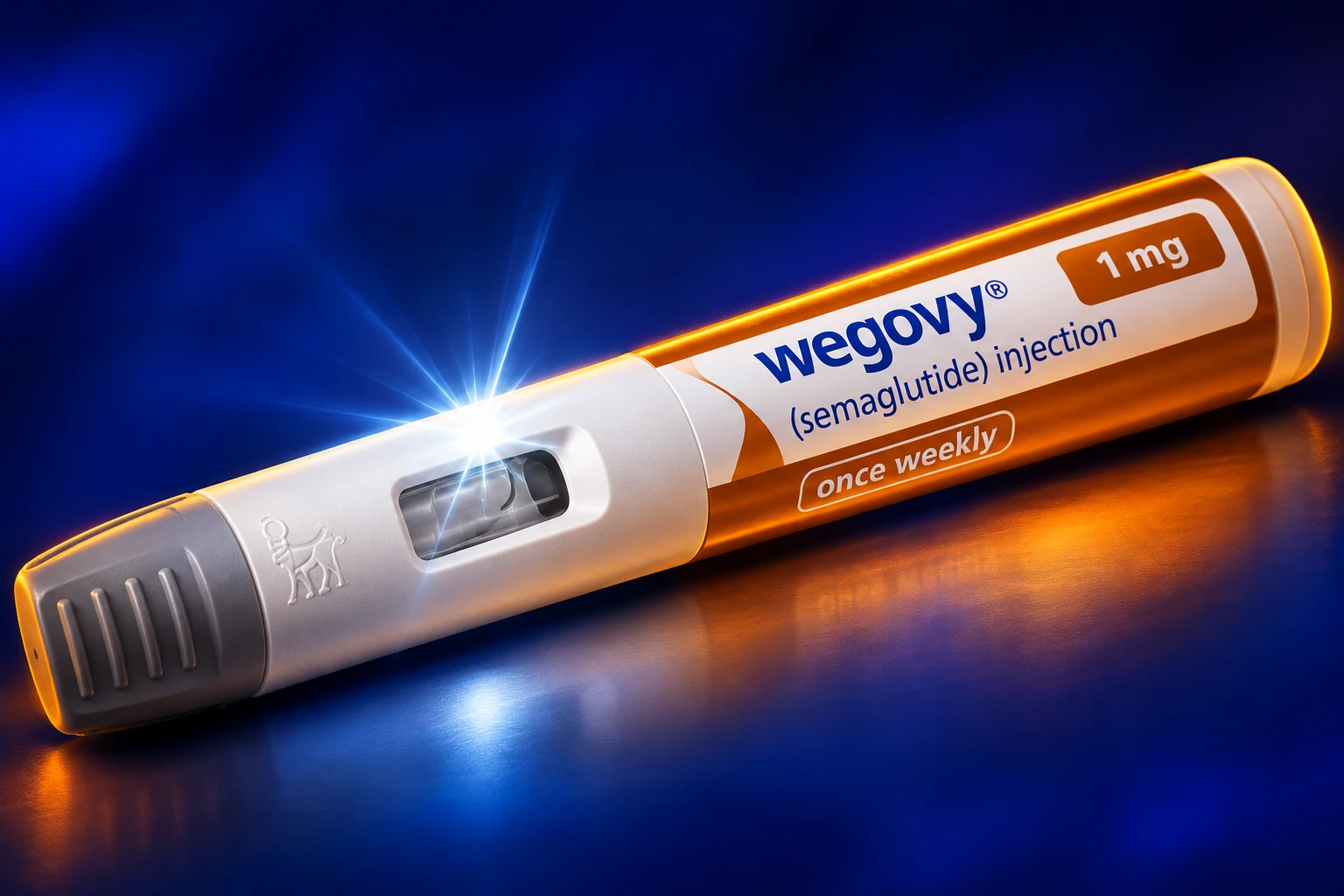
- Wegovy: semaglutide, 2021.
- Mounjaro: tirzepatide, 2022.
- Zepbound: tirzepatide, 2023.
- Foundayo: orforglipron, 2026.
Several of those drugs also carry approvals that have nothing to do with a bathroom scale: fewer major heart events, slower kidney decline, sleep apnea in adults with obesity, and metabolic dysfunction-associated steatohepatitis with moderate-to-advanced fibrosis. That is the pile of benefits sitting on the other side of a rare eye warning.
Steeper Signals From Mass Eye and Ear
The FDA opened the file after a July 3, 2024, paper in JAMA Ophthalmology by Jimena Tatiana Hathaway, MD, MPH, Joseph F. Rizzo III, MD, and colleagues at Mass Eye and Ear. Rizzo directs neuro-ophthalmology there. In summer 2023 his clinic saw three NAION patients in one week, all on semaglutide, and went back through records from December 2017 through November 2023.
The matched study of 16,827 patients is the one that put NAION on the map. In the type 2 diabetes group, 194 people had been prescribed semaglutide and 516 had been prescribed other diabetes drugs; 17 NAION events occurred on semaglutide against 6 on the other drugs, a 36-month cumulative incidence of 8.9% versus 1.8%, hazard ratio 4.28 (1.62 to 11.29). In the overweight or obesity group, 361 were on semaglutide and 618 were on other weight-loss drugs; 20 events versus 3, 6.7% versus 0.8% over 36 months, hazard ratio 7.64 (2.21 to 26.36).
Those percentages are 36-month cumulative incidence in a neuro-ophthalmology referral practice, not a person-year rate in a random sample, which is why they cannot be lined up against the FDA’s 6.4 figure. Rizzo has said his group almost certainly found a higher hazard ratio than will hold in the general public, and that he still thinks the later, lower ratios remain meaningful. Amanda Henderson, MD, chief of neuro-ophthalmology at the Wilmer Eye Institute at Johns Hopkins, put the limit in plainer terms: a single-center chart review, with diagnoses confirmed by specialists, may not travel to other clinics or to people who never see a neuro-ophthalmologist.
Later work split. Cindy X. Cai, MD, MS, and colleagues, writing in JAMA Ophthalmology in April 2025, looked across 14 databases covering 37.1 million adults with type 2 diabetes, including 810,390 new semaglutide users. In an Optum slice of 43,620 new users, the NAION rate was 14.5 per 100,000 person-years, and a self-controlled analysis produced an incidence rate ratio of 1.32 (1.14 to 1.54). They called the rise modest and smaller than first reported. Chien-Hsiang Weng, MD, MPH, at Brown University, said a 21-country study of 160 health organizations found no statistically significant increase, in diabetes or in weight management alone, with sparse events outside diabetes stretching the confidence intervals.
WHERE EXPERTS DISAGREE
- Rizzo’s clinic: He says the Mass Eye and Ear work, plus later studies, support an association, even if the first hazard ratios run high for a referral hospital.
- Weng’s cohort: He says a large multinational follow-up did not find a statistically significant rise in NAION with semaglutide, and that rare events leave wide confidence intervals, especially in people without diabetes.
- Novo Nordisk: The company says the data do not establish a cause-and-effect relationship and that it remains confident in the benefit-risk profile of its GLP-1 medicines.
ICD-10 coding errors, overlapping patient files across research networks, and the simple fact that NAION is scarce all cut both ways. A study that confirms every case at the slit lamp will over-sample the sickest eyes. A claims study will miss some true events and count some false ones. The FDA’s own trial count, 10 probable cases on the drugs, is the figure it is now writing onto the label.
Did Europe Already Warn About NAION?
Yes. Europe’s regulator concluded in June 2025 that NAION is a very rare side effect of semaglutide in Ozempic, Rybelsus, and Wegovy, and said to stop the drug if NAION is confirmed. The FDA’s order covers every GLP-1 and tells doctors to consider stopping unless the benefits clearly outweigh the risk.
On June 6, 2025, the European Medicines Agency’s Pharmacovigilance Risk Assessment Committee finished a review of semaglutide and called NAION a very rare side effect of semaglutide, meaning it may affect up to 1 in 10,000 people taking the drug. Large epidemiology studies in adults with type 2 diabetes pointed to about a two-fold rise, or one extra case per 10,000 person-years of treatment. Trial data, the committee said, also leaned slightly higher than placebo. If NAION is confirmed, treatment with semaglutide should be stopped.
On June 27, 2025, the World Health Organization alerted health-care professionals to NAION with Ozempic, Rybelsus, and Wegovy, and said risk-management plans should treat it as a potential risk. The UK’s medicines regulator followed on February 5, 2026, for semaglutide only. It counted three spontaneous Yellow Card reports from 2018 through August 1, 2025, against about 10.2 million packs dispensed over five years, and said other GLP-1 agonists were not part of that review.
HOW THE WARNING MOVED FROM A CLINIC TO A U.S. LABEL
- July 3, 2024: Hathaway, Rizzo, and colleagues publish the Mass Eye and Ear matched-cohort study linking semaglutide prescriptions to NAION.
- June 6, 2025: Europe’s PRAC concludes NAION is a very rare semaglutide side effect and says to stop the drug if the diagnosis is confirmed.
- June 27, 2025: WHO issues a global alert on semaglutide and NAION.
- July 2025: The American Academy of Ophthalmology and the North American Neuro-Ophthalmology Society reject a blanket stop.
- February 5, 2026: The UK updates semaglutide product information after three Yellow Card reports.
- November 9, 2026: The FDA requires a NAION warning on all GLP-1 RA labels and tells clinicians to consider stopping unless benefits clearly outweigh the risk.
Seventeen months separate Europe’s semaglutide-only finding from the U.S. class-wide order. The American version is broader in scope and looser on what happens after a diagnosis. That gap is now the live clinical question, not whether a warning exists.
1 in 8 Adults Now Take a GLP-1 Drug
A KFF Health Tracking Poll fielded October 27 to November 2, 2025, among 1,350 U.S. adults, found one in eight adults currently taking a GLP-1 drug for weight loss or a chronic condition, with a margin of plus or minus 3 percentage points. That is the 12% current-use figure. Another 18% said they had taken one at some point.
WHO IS ALREADY ON THESE DRUGS
- Current use: 12% of U.S. adults, about 1 in 8, with the highest share at ages 50 to 64 (22%) and 9% at 65 and older.
- Diabetes: 57% of adults who said they had been diagnosed with diabetes had ever used a GLP-1 drug, including 45% who were currently using one.
- Where they got it: 76% from a doctor, 17% from an online provider or website, and 9% from a medical spa or aesthetic clinic.
- Why they already quit: 14% of users said they had stopped because of cost, and 13% because of side effects.
Women reported current use more often than men, 15% against 9%. Among adults told they had heart disease, 29% were currently on a GLP-1 drug. Among those told they were obese or overweight in the past five years, 23% were currently using one. The people most likely to take the drugs are also the people whose baseline NAION risk is already higher.
A blindness headline will not land in a vacuum. Thirteen percent of users have already quit over side effects, and a new irreversible-vision warning can swell that share even when the extra trial risk is 2.6 cases per 100,000 person-years. The 17% who got a GLP-1 drug online, and the 9% who got one at a spa, are also the patients least likely to sit through a new-label counseling talk when the paper insert changes.
What Sudden Painless Vision Loss Looks Like
NAION is a sudden drop in blood flow to the front of the optic nerve. It usually hits one eye, does not hurt, and can leave permanent vision loss. Patients on GLP-1 drugs should treat sudden, painless, one-sided vision changes as urgent and get an ophthalmology exam.
The FDA’s patient list is specific. Sight may go in one eye on waking. Parts of the field can drop out, as a blind spot or as tunnel vision. Colors can look wrong. The sharp center can turn blurry or hazy. If NAION has already happened in one eye, the other eye is at higher risk. Henderson puts that fellow-eye risk at about 20% for patients who have already had the event, which is why she walks through the GLP-1 data with people who have lost vision in one eye and then sends them back to the internist or endocrinologist to pick a diabetes or weight drug.
Vision can worsen over the next 7 to 10 days, or improve a little, then settle. After that, almost all of the loss stays. That is the clock that makes “wait until morning” a bad plan for this pattern, and a fine plan for a floater or an ocular migraine.
SYMPTOMS THE FDA WANTS REPORTED AT ONCE
- One-sided loss: Sudden, painless vision loss in one eye, often noticed on waking.
- Missing field: Blurred or blank patches, blind spots, or tunnel vision.
- Color shift: Distortion of colors in the affected eye.
- Soft center: Reduced central sharpness, described as blurry or hazy spots.
Doctors are told to send suspected cases to an ophthalmologist at once and to consider stopping the GLP-1 drug if NAION is diagnosed, unless the benefits of treatment clearly outweigh the risk. Patients who have already had a NAION event should talk through whether to stay on the drug. The agency is not telling the other millions of users to quit on the basis of this label.
The easy mistake is to treat any odd flicker as an emergency and jam an ER, or to shrug off a dark patch because it does not hurt. The narrow cluster that belongs in urgent care is sudden, painless, one-eye loss of actual sight, checked by covering each eye in turn. Untreated obesity and poorly controlled diabetes still drive far more heart disease, kidney failure, and ordinary diabetic eye damage than this optic-nerve event will ever account for. That comparison does not make a lost eye a rounding error. It does set the scale of the trade.
Novo Nordisk Still Rejects a Causal Link
Novo Nordisk said the data do not establish a cause-and-effect relationship and that it remains confident in the benefit-risk profile of its GLP-1 medicines. Liz Skrbkova, the company’s director of media and stakeholder relations, said Novo will keep reviewing new research and monitoring safety, and she pointed to a 2026 company look at more than 90,000 trial participants that found no association with NAION.
Novo continues to believe the data do not establish a cause-and-effect relationship and we remain confident in the benefit-risk profile of our GLP-1 medicines.
Novo Nordisk spokesperson, statement after the FDA order
Eli Lilly, which makes Mounjaro, Zepbound, and Foundayo, stressed that the safety communication applies to all medicines with GLP-1 RA activity and does not cite findings specific to Lilly products. Spokesperson Misty Fuller said the company is evaluating the update, will respond to the FDA, and will keep reviewing data on ophthalmic events. Patient safety, she said, is Lilly’s top priority.
Geoff Meacham, an analyst at Citi, said the action may briefly raise patient and investor concern, but that the rarity of NAION, stacked against weight, blood-sugar, heart, kidney, and sleep-apnea benefits, should keep a favorable benefit-risk profile and limit changes in who gets a prescription. That is a market view, not a clinical one, and it matches the FDA’s choice to warn rather than restrict.
No Blanket Stop From Eye Specialists
When Europe told doctors to stop semaglutide after a confirmed NAION diagnosis, U.S. eye groups declined to copy that rule. In July 2025, the American Academy of Ophthalmology and the North American Neuro-Ophthalmology Society said they do not support a blanket stop for all patients, because dropping semaglutide could pose significant health risks. The FDA’s November wording, consider stopping unless the benefits clearly outweigh the risk, sits closer to that position than to Europe’s hard stop.
I think, based upon what we know, that would not be appropriate, because these medicines have done a lot of good for a lot of people.
Joseph F. Rizzo III, MD, director of neuro-ophthalmology, Mass Eye and Ear, on discouraging semaglutide use
Rizzo said he feels a duty to tell patients who have already lost vision from any cause about the NAION signal, and that some will stop the drug while others will keep it because it has made them feel better. Either choice, he said, is fine if it is informed. Henderson reviews the data with patients who already have NAION in one eye. Weng said ophthalmologists should place semaglutide in the wider picture of diabetes, obesity, and heart risk, which raise the odds of several eye diseases on their own, including NAION.
The labels will change. The pens and pills stay on the market. For the 12% of adults already injecting or swallowing a GLP-1 drug, the new work is narrower than the headlines: know the one-eye, painless pattern, get that pattern seen the same day, and settle the rest of the benefit-risk talk with the clinician who prescribed the drug, not with a scare post.
Disclaimer: This article is news reporting on an FDA drug-safety action and related regulator and study findings. It is informational only and is not medical advice, a diagnosis, or a recommendation to start, stop, or change any medicine. Readers should talk with a licensed physician or ophthalmologist before making decisions about GLP-1 drugs or sudden vision changes. Figures, product lists, and label rules reflect the FDA, EMA, WHO, MHRA, KFF, and study sources as published and may change as companies update prescribing information.

Xiaomi 18 Pro Goes Global as Its Privacy Filter Falters

iFixit Finds HomeView Glued Shut After Repair Gains

Polymetallic Nodules Shelter 4,139 Animals Miners Want

One UI 9.5 Puts Now Brief Behind a System Agent

Framework’s $99 Keyboard Brings Laptop Repair to the Couch

Microsoft 365 Auth Fault Took Down Exchange and Teams

OpenClaw 2.0 Ships a Team Workplace With Host-Trust Defaults

Xbox Caps Game Pass Cloud Gaming at 15 Hours

OpenAI Unveils GPT-6 Astra With a Critical Cyber Label

Squishy Dumpling Toys Recalled After Hiding Illegal Water Beads
-
 NEWS3 months ago
Microsoft 365 Auth Fault Took Down Exchange and Teams
-
 GAMING3 months ago
Xbox Caps Game Pass Cloud Gaming at 15 Hours
-
 NEWS3 months ago
OpenClaw 2.0 Ships a Team Workplace With Host-Trust Defaults
-
 NEWS3 months ago
OpenAI Unveils GPT-6 Astra With a Critical Cyber Label
-
 LIFESTYLE3 months ago
Squishy Dumpling Toys Recalled After Hiding Illegal Water Beads
-

 BUSINESS3 months ago
Diesel Breaks Its Record as the White House Claims Credit
-

 NEWS3 months ago
IFA 2026’s Weird Gadgets Are Building a Sensor Home
-

 BUSINESS3 months ago
ChargePoint Stock Rally Prices Wilmer’s Three-Year Cash Plan