
NEWS
Google Keeps Android Auto’s Gemini Intelligence on Pixel Phones
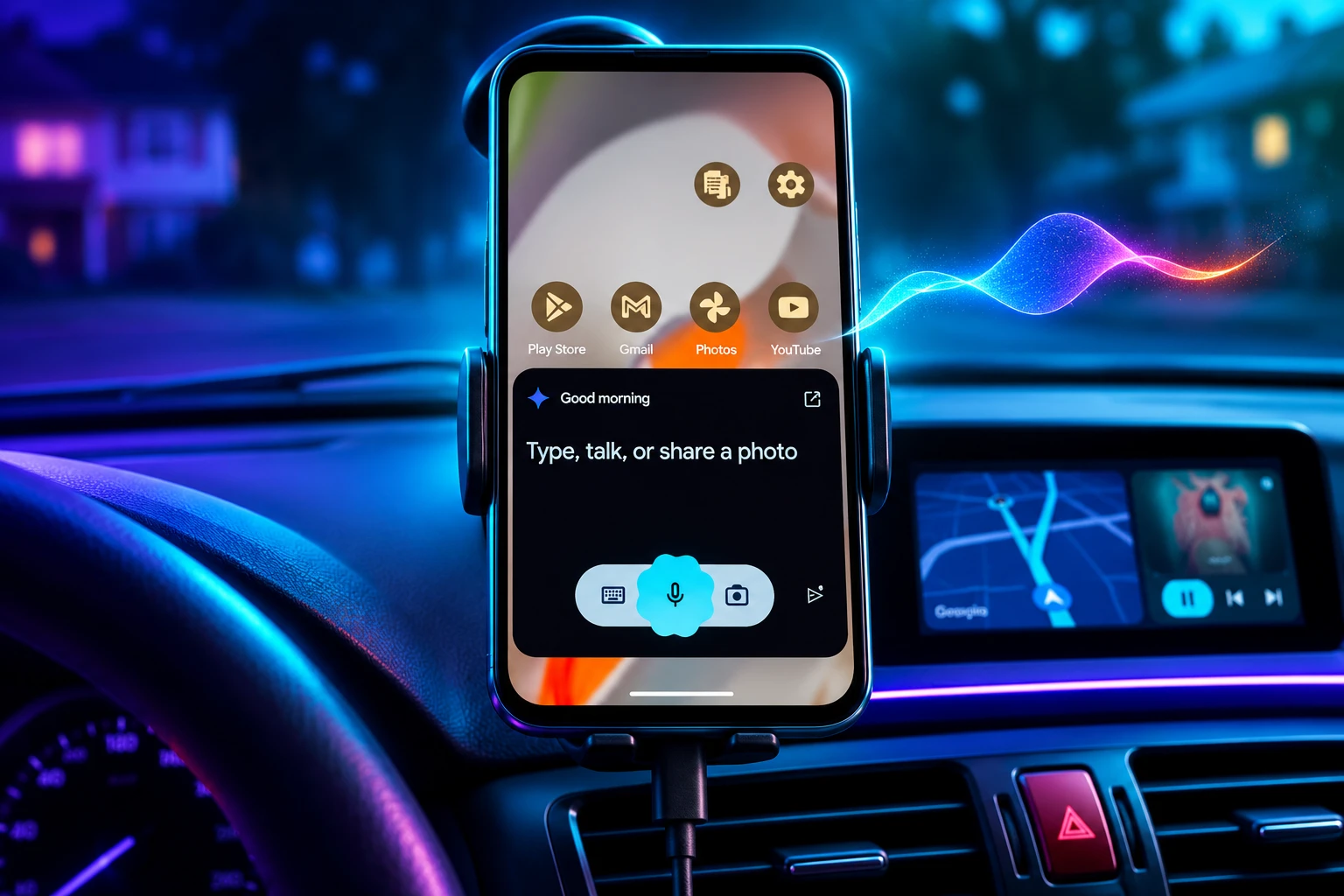
Google is adding Gemini Intelligence to Android Auto for Pixel phones only, even as Samsung, Motorola, and CarPlay get other Gemini tools.

Google will soon put Gemini Intelligence on Android Auto for Pixel phones, while Samsung and Motorola owners who already have the same AI pack still get the older cabin assistant. The company said so on November 10, in a post that also moved Gemini Intelligence onto last year’s Pixel 10 family and onto Motorola’s new Signature 27.
One day later it put a Gemini app on Apple CarPlay for iPhone users worldwide.
Google Locked Android Auto’s Smartest Layer to Pixel
Karthik Thirumalai, product director for Android AI, wrote that Gemini Intelligence “brings the best of Gemini to Android devices, helping your devices work harder for you.” The same November 10 post then narrowed the car. If you have a Pixel phone with Gemini Intelligence, Google said, it will soon bring proactive suggestions to Android Auto, tying together apps and putting personal prompts on the dash.
That sentence does not say “phones with Gemini Intelligence.” It says Pixel. The demo Google chose is a text you should not hunt through while driving.
For example, if your friend texts you to ask where you are meeting for a pilates class, Gemini Intelligence on Android Auto can find your confirmation email and instantly suggest sending the address with a single tap.
Google, November 10, 2026 product post
The footnote under that promise is strict. It needs the Gemini app, extra setup, users 18 and older, and a country and language Google has turned on. Feature availability will vary. There is still no calendar day, only soon.
Back in May, Google described the same move under an older name, Magic Cue: a friend’s text asking for an address, then a one-tap reply drawn from messages, mail, or calendar. The November wording is the first time the company has tied that dash behavior to Pixel in print, after a summer of putting the Gemini Intelligence badge on other makers’ phones.
Which Pixel Phones Get the In-Car Upgrade?
Eligible Pixel phones with Gemini Intelligence, for now, are the Pixel 11 series and the Pixel 10 family that the November Pixel Drop began unlocking on November 10. Google’s Rambler note on that drop lists the Pixel 10, Pixel 10 Pro, Pixel 10 Pro XL, and Pixel 10 Pro Fold. The Pixel 10a is not on that list.
Pixel 11 phones picked up Gemini Intelligence in late summer. The Pixel Drop is what pulls last year’s main Pixel 10 models into the same pack, with Rambler dictation, multi-step tasks in apps, and the personal prompts that feed the car demo. Updates started November 10 and, Google said, keep moving out over several weeks depending on the phone and carrier.
So the in-car layer is not “the newest Pixel only.” It is last year’s main Pixel 10 line plus Pixel 11, and it still stops at Google’s own brand. Anyone plugging a different Android phone into the same head unit is on a different assistant, even if that phone already runs Gemini Intelligence at home.
A $1,599 Motorola With a Pixel-Sized Catch
Motorola is, in Google’s words, introducing its first Gemini Intelligence device. U.S. buyers can place a Motorola Signature 27 pre-order on November 19. Motorola priced that phone at $1,599. The November 10 post says it gets Rambler, the voice-to-text cleaner that strips filler words as you speak, and it is in the Device Assistance demos too.
Samsung is already inside the club. A footnote on the same Google post says the summer rollout included the Galaxy S26, S26+, and S26 Ultra, plus the Galaxy Z Fold8 Ultra, Z Fold8, and Z Flip8. Those are Gemini Intelligence phones by Google’s own count. None of them appear in the Android Auto sentence.
The louder problem is not horsepower. It is the gate. If Samsung’s current foldables and Motorola’s new $1,599 slab already clear Google’s Gemini Intelligence bar, keeping the dash prompt on Pixel is a product choice, not a leftover chip shortage. Android Auto becomes the place Google still treats as Pixel software while the badge on the box goes wide.
THE CABIN SPLIT
| Layer | Pixel 10 and Pixel 11 | Other Gemini Intelligence phones | Other Android Auto phones |
|---|---|---|---|
| Proactive one-tap from texts, mail, calendar | Coming soon | Not named | No |
| Personal Intelligence (Gmail, Calendar, Photos, Maps, YouTube, Search) | Yes, with opt-in | Yes, with opt-in | Yes, with opt-in |
| Gemini voice in the car | Yes | Yes | Yes |
| Google’s pilates-style text plus booking-mail reply | Coming soon | Not named | No |
Task automation in the Gemini app, the bit that can order food, hail a ride, or book a table, is also widening to the UK, India, and Japan. That is a phone feature. It is not the dash prompt Google reserved for Pixel.
What Personal Intelligence Does in Android Auto
Everyone else is not going into the car with a mute assistant. On October 20, Karan Daryanani, senior product manager for Gemini, said Personal Intelligence had started rolling out on Android Auto, with cars that have Google built-in due in the following months. With permission, it ties Gemini to Workspace (Gmail and Google Calendar), Google Photos, Google Maps, YouTube, and Search.
It does not read your SMS thread the way the pilates demo does. It also does not fire a suggestion before you ask. You talk, and Gemini looks through Google apps you turned on.
WHAT GOOGLE SAYS YOU CAN ASK
- Airport run: “What’s my flight gate? And is my flight on time?” pulls the booking mail and a status check in one answer.
- Dinner on the route: “Find me an indoor restaurant along my route that matches my usual vibe” uses past taste, including a vegetarian shortlist if that is how you eat.
- A saved visit: “Take me to my doctor’s appointment” skips the street address you cannot type at a red light.
- A photo you took: “Find the car wash from the photo I took last week and navigate there” searches Google Photos instead of the camera roll by hand.
- Yesterday’s chat: “Take me to the coffee shop we were talking about yesterday” is Google’s own pickup line for a plan that never made it into Maps.
Apps stay disconnected until you opt in, and you can shut it off in Gemini settings. Cars with Google built-in, Google said, only share those personal answers when your phone is in the car and connected. Skip Personal Intelligence and navigation, music, calls, and generic questions still work. The answers just are not tailored.
The geographic fence is real. Personal Intelligence is rolling out to eligible personal Google accounts, 18 and older, and not to Workspace business, enterprise, or school users. It is excluded in the European Economic Area, Switzerland, the United Kingdom, and Nigeria. That is a different map from Gemini Intelligence on the phone, which Google is widening into the UK, India, and Japan for some tasks.
iPhone Drivers Can Open Gemini on CarPlay
On November 11, the day after the Pixel car teaser, Daryanani’s team began rolling out the Gemini app on Apple CarPlay to all Gemini users on iOS, in every language Gemini Live already supports. Tap the icon on the CarPlay grid or side rail, pick up a recent chat or start a new one, and talk over Gemini Live. Interrupt it, change the subject, or pause for an exit. The chat syncs back to the iPhone app when you park.
Google’s own CarPlay script is the leave-time question Android Auto’s Pixel demo never quite asks. Drivers are told to try “What does my day look like?” and to ask when they need to leave for the next appointment. They can request a daily brief, a pass through unread mail, or a summary of a long thread, then talk through a reply. Daily Brief has to be turned on first, and that personal layer is blocked for people under 18 and in the EEA and Nigeria.
Apple has its own assistant in the same cabin. In June it introduced Siri AI on CarPlay, alongside iPhone, Apple Watch, and AirPods, with personal context from messages, emails, photos, and more. Google is now selling iPhone drivers a Gemini Live ride while it still will not put the pilates one-tap on a Galaxy or a Motorola dash. The open-Android pitch and the car pitch are not the same pitch.
Google put the average commute at about an hour. That hour is why both companies are stuffing assistants into the dash. It is also why a Pixel-only prompt on Android Auto lands harder than another Rambler demo on a homescreen.
12 GB of RAM Keeps Most Phones Out
Gemini Intelligence was never meant to be a software toggle on every Android. Gemini Intelligence device rules still call for 12 GB of RAM, a qualified flagship chip, and Gemini Nano v3 or newer, plus long software and security commitments. That bar, not the car sentence, is what keeps older Pixels and last year’s midrange phones off the pack in the first place.
The car sentence then adds a second cut on top of that bar. Phones that already made it in, including Samsung’s S26 series and Motorola’s Signature 27, still are not promised the dash prompt. On May 12, Guemmy Kim, senior director of product and user experience for Android for Cars, said there were more than 250 million Android Auto-compatible cars on the road, and that cars with Google built-in spanned more than 100 models from 16 brands. Most of those cabins will see Gemini, and many will see Personal Intelligence. Almost none of them will see the pilates card unless a Pixel 10 or Pixel 11 is on the cable or the wireless stack.
FROM MAY PROMISE TO NOVEMBER SOON
- May 12, 2026: Kim’s post says that if your phone has Gemini Intelligence, you will be able to use it in Android Auto later this year, with Magic Cue and a DoorDash order-from-the-car demo.
- October 20, 2026: Personal Intelligence starts rolling out on Android Auto, drawing on Gmail, Calendar, Photos, Maps, YouTube, and Search.
- November 10, 2026: Gemini Intelligence reaches Pixel 10, Pixel 10 Pro, Pixel 10 Pro XL, Pixel 10 Pro Fold, and Motorola’s Signature 27. The Android Auto prompt is restated as Pixel-only and still “soon.”
- November 11, 2026: The Gemini app begins rolling out on Apple CarPlay for iOS Gemini users worldwide.
- November 19, 2026: U.S. pre-orders open for the Signature 27, a Gemini Intelligence phone that Google has not named for the dash prompt.
May’s “later this year” became November’s “soon.” The DoorDash line from May is still sitting in that older post: tell Gemini, “Order my usual fish tacos on Doordash for pickup, but double the order,” then confirm with a tap. Google has not said whether that order flow ships with the Pixel dash prompt or stays a separate Gemini task.
The One-Tap Pilates Reply Is Still Coming
The useful split is simple. Gemini in the car is already global. Personal Intelligence makes it nosy about Google apps if you opt in. Gemini Intelligence on a Pixel is what Google says will start suggesting the reply before you rummage through mail at 70 miles an hour. Rival phones can wear the Gemini Intelligence label and still miss that last piece.
WHAT WE KNOW
- The Pixel wording: Google’s November 10 post names a Pixel phone with Gemini Intelligence, not every Gemini Intelligence device, for the Android Auto prompts.
- The Pixel list: Pixel 11, plus Pixel 10, Pixel 10 Pro, Pixel 10 Pro XL, and Pixel 10 Pro Fold from the Pixel Drop. The Pixel 10a is not listed.
- The other Gemini: Personal Intelligence is the opt-in Google-apps layer on Android Auto. The Gemini iOS app is on CarPlay as of November 11.
- The limits: 18 and older, Gemini app, extra setup, select countries and languages. Personal Intelligence also stays out of the EEA, Switzerland, the UK, and Nigeria.
WHAT IS UNCONFIRMED
- A ship day: Google has not published a date for the Pixel dash prompts, only “soon.”
- Samsung and Motorola: No public sentence yet puts S26, Z Fold8, or Signature 27 on that Android Auto layer.
- Unasked traffic nags: Google’s written Auto demo is a one-tap reply after a text. It has not confirmed a prompt that tells you, unasked, when to leave based on traffic.
Until that date lands, the pilates card is a demo with a brand on it. Plug in a Pixel 10 or Pixel 11 and Google says the dash will start connecting those dots. Plug in the $1,599 Motorola that wears the same AI name, or a Galaxy that already runs Gemini Intelligence, and the car stays on the assistant that waits for you to ask.

Xiaomi 18 Pro Goes Global as Its Privacy Filter Falters

iFixit Finds HomeView Glued Shut After Repair Gains

Polymetallic Nodules Shelter 4,139 Animals Miners Want

One UI 9.5 Puts Now Brief Behind a System Agent

Framework’s $99 Keyboard Brings Laptop Repair to the Couch

Microsoft 365 Auth Fault Took Down Exchange and Teams

OpenClaw 2.0 Ships a Team Workplace With Host-Trust Defaults

Xbox Caps Game Pass Cloud Gaming at 15 Hours

OpenAI Unveils GPT-6 Astra With a Critical Cyber Label

Squishy Dumpling Toys Recalled After Hiding Illegal Water Beads
-
 NEWS3 months ago
Microsoft 365 Auth Fault Took Down Exchange and Teams
-
 GAMING3 months ago
Xbox Caps Game Pass Cloud Gaming at 15 Hours
-
 NEWS3 months ago
OpenClaw 2.0 Ships a Team Workplace With Host-Trust Defaults
-
 NEWS3 months ago
OpenAI Unveils GPT-6 Astra With a Critical Cyber Label
-
 LIFESTYLE3 months ago
Squishy Dumpling Toys Recalled After Hiding Illegal Water Beads
-

 BUSINESS3 months ago
Diesel Breaks Its Record as the White House Claims Credit
-

 NEWS3 months ago
IFA 2026’s Weird Gadgets Are Building a Sensor Home
-

 BUSINESS3 months ago
ChargePoint Stock Rally Prices Wilmer’s Three-Year Cash Plan