
NEWS
The Titanium iPhone 20 Pro Rumor Undoes a Year of Aluminum
A Weibo leak says iPhone 20 Pro prototypes already use titanium, a year after Apple sold aluminum as 20 times better at moving heat.

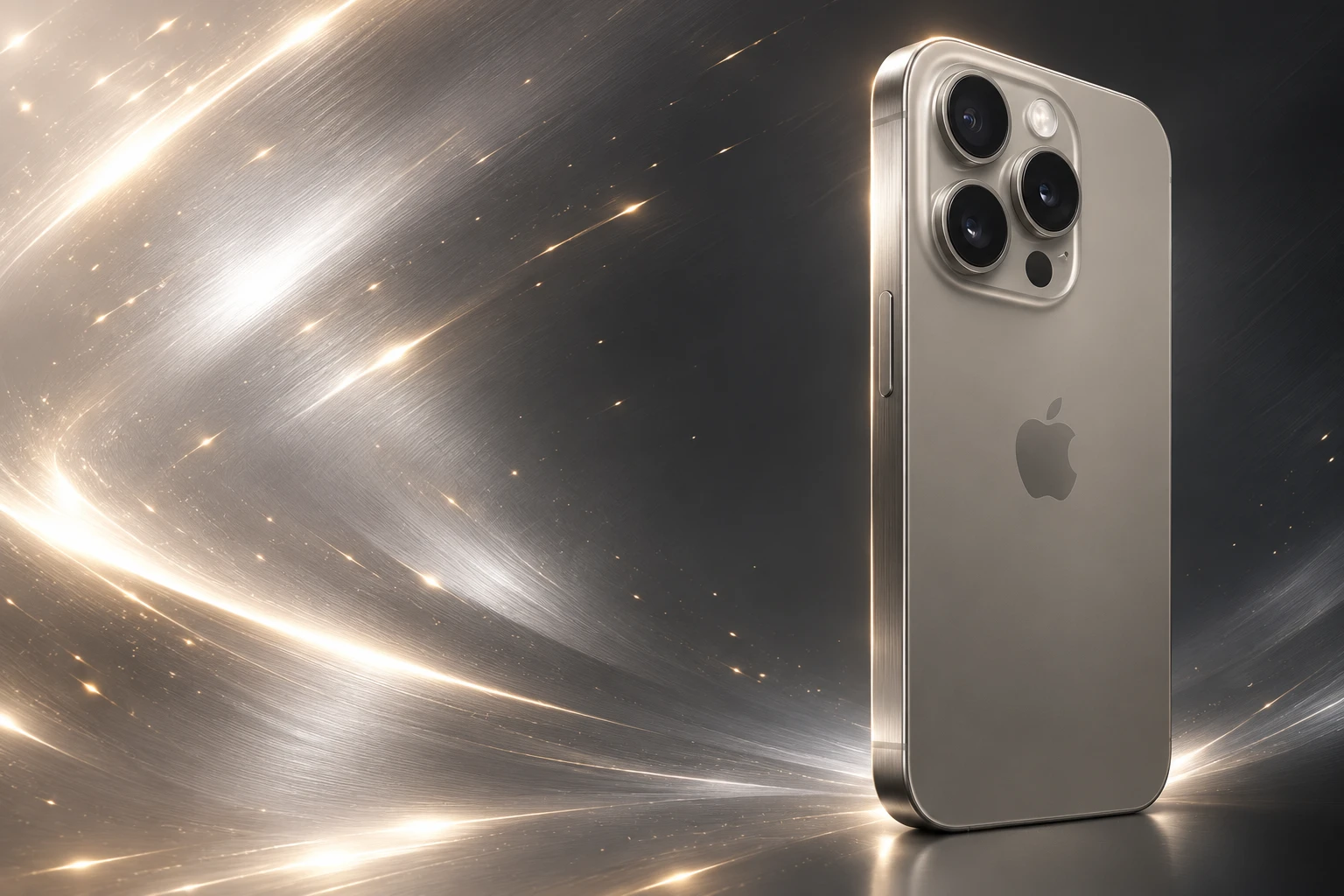
A Weibo leaker says early iPhone 20 Pro prototypes already use a titanium frame with a rounder shape than the current Pro. Fixed Focus Digital described the look as close to the iPhone Air, only much more rounded, and said a titanium frame is on hardware from an early engineering stage.
Apple’s live Pro page still sells the opposite story. The iPhone 18 Pro that shipped in 2026 is an aluminum unibody with a next-generation vapor chamber, the same thermal brief Apple used when it dropped titanium in 2025.
Early Prototypes Already Wear a Titanium Frame
The November 18, 2026 post is specific about where the metal sits. Fixed Focus Digital said the titanium frame is already in use on prototype devices, not as a slide in a materials deck, and that the outline is substantially more rounded than the Air even while it borrows that phone’s slim, polished language.
Leakers have been calling the 20th-anniversary flagship the iPhone 20 Pro. Apple has not said what it will actually name a phone due in fall 2027, and a part on a bench is still a long way from a finished product. The claim still matters because it is about hardware Apple is already cutting, not a mood board.
WHAT WE KNOW
- The leak: Fixed Focus Digital said on November 18, 2026, that iPhone 20 Pro engineering devices use a titanium frame with a more rounded design.
- The current Pro: Apple’s own specs still list an aluminum unibody on the current Pro, with the iPhone 18 Pro at 211 grams and the Pro Max at 249 grams.
- The design brief: Mark Gurman has said the anniversary Pro uses front and rear glass that curves into the sides around a thin metal band, internally V73 and V74.
WHAT IS UNCONFIRMED
- The shipping metal: Early engineering frames can change before tooling is locked, and the leaker has not said titanium is frozen for production.
- The name: “iPhone 20 Pro” is a leaker label for a fall 2027 phone; Apple’s naming plans are unknown.
- The full lineup: Ice Universe said Apple is testing four models and two glass shapes, which may be fallbacks rather than four shipping phones.
Two days earlier, on November 16, the same leaker said the anniversary phones would reuse the iPhone Air’s glass, reshaped with greater curvature on all four sides. An illustration with that post showed curved front and rear glass meeting a narrow, polished metal band, with physical buttons and a raised camera still visible. The November 18 claim is that the remaining band is titanium.
The Heat Claim Apple Made for Aluminum
When Apple unveiled the iPhone 17 Pro on September 9, 2025, it did not treat the metal swap as a color story. It put a heat-forged, aerospace-grade 7000-series aluminum unibody at the center of a new cooling stack and laser-welded a vapor chamber into that chassis so the A19 Pro could hold performance longer.
Deionized water is sealed inside the vapor chamber, which is laser-welded into the aluminum chassis to move heat away from the powerful A19 Pro, allowing it to operate at even higher performance levels. The heat is carried into the forged aluminum unibody, where it is distributed evenly through the system, managing power and surface temperatures to deliver incredible performance while remaining comfortable to hold.
Apple, iPhone 17 Pro newsroom post, September 9, 2025
Apple said that pairing produced up to 40 percent better sustained performance than the previous generation. Launch materials put aluminum’s thermal conductivity at 20 times that of the titanium it replaced. The iPhone 18 Pro kept the brief. Apple still markets a durable aluminum design and a next-generation vapor chamber on a phone you can buy now, with finishes in Black, Silver, Glacier, and Burgundy and 85 percent recycled aluminum in the enclosure.
Independent teardowns backed the 2025 pitch on the bench. iFixit’s thermal camera found the iPhone 16 Pro Max hit 37.8 degrees Celsius and then throttled, while the iPhone 17 Pro Max held 34.8 degrees Celsius and did not throttle, a 3.0 degree gap under load. The camera plateau on that aluminum body also scratched more readily in the same teardown, which is the other half of the trade Apple made.
A Narrow Band Cannot Dump Heat Like a Unibody
Titanium is the stronger, stiffer metal at a thin gauge, which is why it still holds up the 5.6 mm iPhone Air. It is a poor way to move heat. Phone-grade aluminum alloys typically run about 167 to 220 W/m·K; Grade 5 titanium, the alloy used in consumer frames, sits around 6 to 7 W/m·K, so aluminum spreads heat an order of magnitude better. By volume, that titanium is about 65 percent heavier, at roughly 4.4 to 4.5 g/cm³ against aluminum’s 2.7 g/cm³.
THE TWO METALS APPLE HAS ROTATED THROUGH THE PRO LINE
| Metal | Heat flow | Density | Where Apple used it |
|---|---|---|---|
| Aluminum (6xxx / 7000-series) | About 167 to 220 W/m·K | About 2.7 g/cm³ | iPhone 17 Pro and iPhone 18 Pro unibody |
| Grade 5 titanium | About 6 to 7 W/m·K | About 4.4 to 4.5 g/cm³ | iPhone 15 Pro, iPhone 16 Pro, iPhone Air, iPhone Duo |
A return to titanium would not automatically delete the vapor chamber. The iPhone 15 Pro already bonded a titanium outer band to an inner aluminum structure, and Apple could do that again, welding the chamber to a hidden core while the visible edge is titanium. Gurman’s remaining band is still a thinner, worse path into the air than the one-piece aluminum body Apple is selling on the 18 Pro. The 15 Pro and 16 Pro years were the ones that drew the overheating complaints the 2025 redesign was built to end.
Materials do not usually bounce back after two generations unless the last swap failed to land the way the company hoped. Aluminum won on heat and on factory yield. It lost on the thing people notice first, which is whether a flagship feels expensive in the hand and whether the corners dent when keys ride in the same pocket. A 20th-anniversary phone has to survive that first pick-up in a way a mid-cycle unibody did not.
Two Generations of Steel, Titanium, Then Aluminum
Lined up on Apple’s own spec sheets, the Pro frame is not a metal Apple marries. Stainless steel covered the iPhone 13 Pro and iPhone 14 Pro. Titanium covered the iPhone 15 Pro at 187 grams and the iPhone 16 Pro at 199 grams. Aluminum covered the iPhone 17 Pro at 206 grams and the iPhone 18 Pro at 211 grams. Each metal held for two generations. The weights are not a clean like-for-like series, because the 15 Pro was a 6.1-inch phone and the three that followed are 6.3-inch, but the cadence is clear.
THE PRO FRAME APPLE HAS NAMED SINCE 2021
- 2021 to 2022: iPhone 13 Pro and iPhone 14 Pro ship with stainless-steel frames, 204 grams and 206 grams.
- 2023: iPhone 15 Pro switches to titanium and drops to 187 grams on a 6.1-inch body.
- 2024: iPhone 16 Pro stays on titanium at 199 grams.
- 2025: iPhone 17 Pro moves to an aluminum unibody at 206 grams and adds the first iPhone vapor chamber.
- 2026: iPhone 18 Pro stays on aluminum at 211 grams, with a next-generation vapor chamber still in the pitch.
- November 18, 2026: Fixed Focus Digital says early iPhone 20 Pro engineering devices use a titanium frame.
- Fall 2027: the 20th-anniversary models are expected to launch, if that schedule holds.
If the leak is right, aluminum’s Pro run would last two years, the same span titanium just had, and the anniversary phone would put the older metal back on the most expensive model in the line. That is a pattern, and it is also a tell. Apple used titanium when it wanted a lighter, tougher edge than steel. It used aluminum when the A19 Pro and on-device models needed a chassis that could take heat. It would be using titanium again when the job is to make a landmark phone feel like one.
Curved Glass Still Needs a Metal Spine
The band is only the leftover metal after glass takes over more of the sides. In August 2026 Gurman said a more ambitious version that replaced even more metal with glass was dropped early, and that the 2027 plan still curves front and rear glass into the sides with a metal band in the middle. He has called that the biggest Pro overhaul since the iPhone X. Fixed Focus Digital’s Air-glass posts sit on top of that reporting, including an August claim that Apple modified iPhone Air manufacturing equipment to make more rounded glass parts.
On November 18, Ice Universe said Apple is developing four models with two designs: two with flat glass and two with glass that curves along all four edges. The curved versions are said to have borders around 1 mm, with the surrounding glass making those borders almost disappear head-on after about three years of prototypes that started with a more aggressive curve and were later pulled back. Screen-protector samples circulating with those posts show rounded corners, shallow curves on all four edges, and a very narrow border. Ice Universe wrote that easy screen-protector application is ending and that a more comfortable grip is the point of the shape.
OTHER 2027 DETAILS STILL IN THE SAME PILE
- Screen sizes: Digital Chat Station has claimed 6.41-inch and 6.96-inch panels for the Pro and Pro Max, against the iPhone 18 Pro’s 6.3-inch and 6.9-inch displays.
- The glass: Fixed Focus Digital says the anniversary phones reuse iPhone Air glass with greater four-sided curvature.
- The fallback: Ice Universe’s flat-glass pair may be a safety design if the curved tools do not yield, rather than four phones for sale.
- The extras: separate posts have floated an A21 Pro on TSMC’s N2P process, a 17-nanometer camera sensor, and a merged Action button; none of those claims is part of the titanium leak.
A four-sided curve plus a thin band is a harder thermal package than a forged unibody with a camera plateau. The same leaker who now says titanium is on the bench earlier argued that the Air glass process would help thinness and heat. Apple may believe the chamber plus that glass is enough to wear titanium again. The physics of the outer metal do not change because the anniversary calendar does.
Why the Air Kept Its Titanium Frame
Apple never actually left titanium. It moved the metal off the Pro line and onto the two phones whose job is to be thin or to fold. The iPhone Air uses a titanium frame to stay at 5.6 mm. The iPhone Duo uses a titanium frame and a Grade 5 titanium hinge cover. Those products need stiffness at a skinny cross-section more than they need a giant heat spreader in the outer skin, which is the inverse of the 2025 Pro brief.
Bringing that metal back to the Pro would collapse the split Apple just created. The Air would no longer be the titanium iPhone. The Pro would share its edge material with the thin phone and the folding phone, and it would give up the unibody that Apple is still calling its finest. For a 20th-anniversary model, that may be the point. For anyone who bought the 18 Pro as a thermal machine, it is a different product story than the one on the spec sheet.
The worry that follows is obvious, and it does not require a leak to state. A rounder, glassier Pro with a worse outer conductor will run closer to the 16 Pro’s heat path unless the chamber, the inner core, and the glass do more work than they do in the 18 Pro. Apple can still choose that trade. It would just be choosing look and grip over the pitch it made when it left titanium.
The Frame on the Bench Can Still Change
Fixed Focus Digital has already flagged the limit of the report: the titanium piece comes from an earlier engineering stage, and the material can still change before production. Gurman’s glass-and-band plan is older and broader than one Weibo post. Ice Universe’s two-design split says the curve itself is still under review. That is not a shipping iPhone.
What is shipping is the iPhone 18 Pro, an aluminum unibody at 211 grams with a vapor chamber Apple is still using as a selling point. What is on the bench, if the November 18 leak is right, is a titanium frame for a rounder phone due in fall 2027. Apple can keep both stories true for months. It cannot keep both of them true on the same flagship once that phone has to be cut from one metal.

The Strip Bojangles That Charged $100 for 10 Minutes

The Security Fixes Took Microsoft and the NSA Offline

iOS 27 Finally Shrinks the Giant iPhone Lock Screen Clock

AirPods Pro 3 Are $179 Again, Below Last Year’s Cut

Dragon Returns ISS Samples Only It Can Bring Home

Microsoft 365 Auth Fault Took Down Exchange and Teams

OpenClaw 2.0 Ships a Team Workplace With Host-Trust Defaults

Xbox Caps Game Pass Cloud Gaming at 15 Hours

OpenAI Unveils GPT-6 Astra With a Critical Cyber Label

Squishy Dumpling Toys Recalled After Hiding Illegal Water Beads
-
 NEWS3 months ago
Microsoft 365 Auth Fault Took Down Exchange and Teams
-
 NEWS3 months ago
OpenClaw 2.0 Ships a Team Workplace With Host-Trust Defaults
-
 GAMING3 months ago
Xbox Caps Game Pass Cloud Gaming at 15 Hours
-
 NEWS3 months ago
OpenAI Unveils GPT-6 Astra With a Critical Cyber Label
-
 LIFESTYLE3 months ago
Squishy Dumpling Toys Recalled After Hiding Illegal Water Beads
-

 BUSINESS3 months ago
Diesel Breaks Its Record as the White House Claims Credit
-

 NEWS3 months ago
IFA 2026’s Weird Gadgets Are Building a Sensor Home
-

 BUSINESS3 months ago
ChargePoint Stock Rally Prices Wilmer’s Three-Year Cash Plan